
How to Handle Moguls on a Snowboard with Balance and Control
March 20, 2025 | Snowboarding
Snowboarding on moguls is one of the most challenging yet rewarding skills a rider can develop. If you’ve ever found yourself struggling to control your board on a field of bumps, you’re not alone. In this guide, we’ll break down everything you need to know to ride moguls with confidence, from basic techniques to advanced tips. Whether you’re a beginner looking to gain control or an intermediate rider aiming to improve, this article will help you take your snowboard skills to the next level.
How Do Moguls Form?
Moguls are one of the most common obstacles on the mountain, formed by repeated turns of skiers and snowboarders. This creates an unpredictable pattern of bumps and valleys, making snowboarding in moguls difficult. The key to success is learning how to turn effectively, control your speed, and keep your body in motion to absorb impact.
Gear You Need for Riding Moguls
Before tackling moguls, it’s essential to use the right snowboard bindings, boots, and board setup. A shorter snowboard with a flexible design is ideal, as it allows for quick turns. Snowboard bindings should be adjusted to provide stability while allowing enough movement for absorbing bumps. Wearing protective gear, such as knee pads, can also help reduce the impact of falls.
How to Position Your Body for Moguls?
The way you position your body when riding moguls can make all the difference. Keep your knees soft to absorb the bumps, and maintain a low stance for better control. Your weight should be centred over the board, allowing you to respond quickly to the terrain. Avoid stiffening up, as this makes it harder to adjust to variable snow conditions.
Read More: Common Ski Injuries and How to Get Back on the Slopes
Best Techniques to Ride Moguls
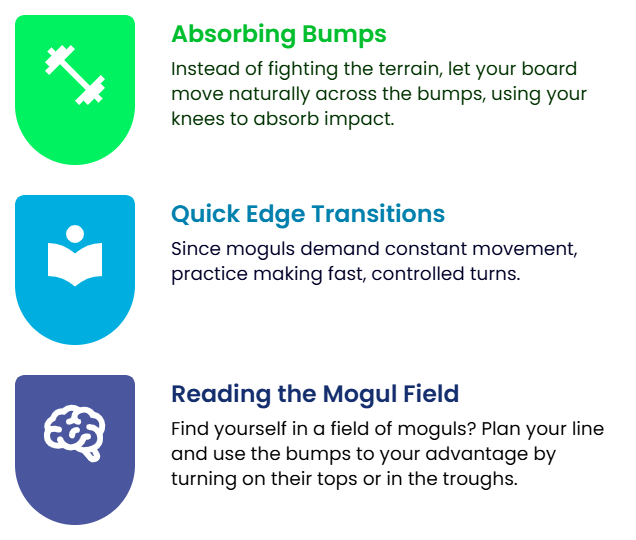
Riding moguls effectively requires special turns and techniques. Here are some key movements to practice:
How to Control Speed When Riding Moguls?
Speed is one of the biggest challenges in a mogul field. To stay in control, use short, quick turns to regulate your pace. Lean slightly forward to maintain balance and avoid leaning back, which can cause you to lose control. Keep your upper body facing downhill while letting your lower body handle the turns.
Read More: How To Clean A Snowboard: Proper Maintenance Tips
Common Mistakes to Avoid
When riding moguls on a snowboard, many beginners make common mistakes that can lead to falls. Avoid these errors to improve your technique:
- Riding Too Stiffly: Keeping your legs rigid will make it harder to adapt to bumpy terrain.
- Leaning Back: This throws off your balance and makes it harder to turn.
- Ignoring Your Line: Always plan your next three turns to stay ahead of the bumps.
How to Practice Riding Moguls?
The best way to get comfortable with moguls is through practice. Start with smaller moguls and gradually work your way up to steeper, more challenging runs. Focus on motion, weight distribution, and keeping a steady rhythm. If possible, record yourself on video to review key moments and identify areas for improvement.
Can Watching Snowboard Mogul Videos Help?
Watching YouTube videos of expert riders can provide valuable insights into proper technique. Look for videos with transcripts to follow along with the key tips and tricks. Reading the description and comments can also help you learn from others’ experiences and feedback.
Advanced Tricks for Snowboard Moguls
Once you’ve mastered the basics, try these tricks to improve your snowboard skills:
- Direct Line Riding: Instead of zigzagging across the moguls, ride a straighter path while absorbing impact with your knees.
- Jump Turns: These are useful for steep mogul fields where quick motion is necessary.
- Speed Control Through Edging: Learn to use your edges effectively to slow down without stopping.
Conclusion
Mastering moguls on a snowboard takes time, but with patience and the right techniques, you can ride with confidence. Focus on balance, controlled turns, and reading the terrain to improve your skills on bumpy runs. Avoid common mistakes like stiff posture and leaning back, and instead, keep your movements fluid. The best way to progress is through consistent practice and expert instruction.
If you’re looking for professional guidance to refine your technique, Contact us to connect with top-rated ski and snowboard schools and take your riding to the next level!
More Posts
Cross‑Country Skiing: Techniques for Beginners
Cross‑country skiing is an exciting and rewarding winter sport that offers both a great workout...
read More
Snowboarding Boots: Essential Gear for 2026
Snowboarding boots are an essential part of your snowboarding gear, offering comfort, support, and performance...
read More
Best Kids Ski Schools: A Parent’s Complete Guide
Teaching your child how to ski is about more than just learning a new sport—it’s...
read More
Adventure Ski & Snowboard School: Everything You Need to Know
Winter sports offer more than just excitement—they create confidence, discipline, and unforgettable experiences. Choosing an...
read More
Best Ski Schools for Kids: What Truly Matters for Young Skiers
When children learn to ski the right way, it can shape how they feel about...
read More
Understanding Skiing Boarding Schools and How They Work
Education does not always follow a traditional classroom-only path. For students who thrive in structured...
read More