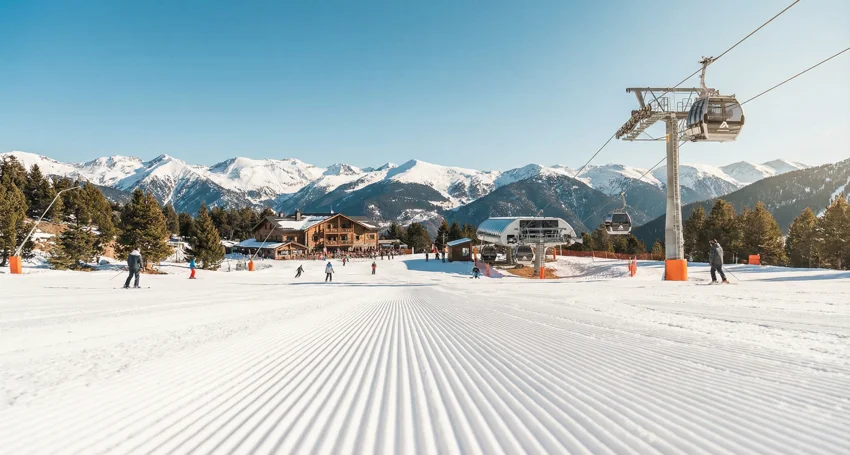
Tucked away in the heart of the Pyrenees, the tiny principality of Andorra has long been a favourite destination for savvy skiers and snowboarders. Offering a unique blend of Spanish and French cultures, this small nation packs a mighty punch when it comes to its ski offerings. With extensive, modern ski areas, a fantastic snow record, and a reputation for being great value, it’s no wonder that Andorra is becoming a mainstream rival to many Alpine resorts.
For years, Andorra was seen as a budget-friendly choice, particularly popular with beginner and intermediate skiers. While it still offers exceptional value, significant investment in its infrastructure has transformed the ski experience. The creation of Grandvalira, one of the largest ski areas in Europe, and the continued development of Vallnord Pal-Arinsal, have put Andorra firmly on the map for skiers of all abilities. The resorts are modern, the lift systems are fast, and the range of terrain is surprisingly vast.
Beyond the slopes, Andorra offers a vibrant and welcoming atmosphere. The capital, Andorra la Vella, is a bustling hub known for its tax-free shopping, while the smaller villages dotted around the mountains offer a more traditional Pyrenean experience. Whether you're looking for lively après-ski, family-friendly activities, or simply a relaxing mountain getaway, Andorra has something to offer everyone. This guide will take you through everything you need to know to plan the perfect Andorran ski adventure.
Why Ski in Andorra?
Andorra has carved out a niche for itself in the European ski scene, and for good reason. It presents a compelling package that appeals to a wide range of skiers and snowboarders, from complete beginners to seasoned experts. One of its biggest draws is the sheer scale of its ski areas. Grandvalira Resorts Andorra boasts over 210km of linked pistes, making it one of the largest ski domains in the Pyrenees, if not Europe. This vast expanse of terrain means you can ski all day without ever repeating a run, exploring a huge variety of bowls, tree-lined trails, and wide-open groomers.
Another significant advantage is the country's excellent snow record. The Andorran Pyrenees consistently receive heavy snowfall throughout the winter, and this is backed up by one of the most extensive snowmaking systems in the world. This combination ensures reliable snow cover from early December right through to April, making it a safe bet for both early and late-season ski trips. The resorts are also known for their high number of sunshine hours, so you can often enjoy perfect bluebird days on the slopes.
Culturally, Andorra offers a unique experience. The blend of Spanish and French influences is evident in the food, language, and customs. You can enjoy delicious tapas and paella one night, and classic French mountain cuisine the next. The atmosphere is generally more relaxed and informal than in some of the more traditional Alpine resorts, and the locals are known for their warm hospitality. Finally, Andorra remains one of the best value ski destinations in Western Europe. While it's no longer just a 'budget' option, the prices for lift passes, accommodation, food, and drink are noticeably lower than in comparable resorts in France, Switzerland, and Austria. This makes it an excellent choice for families, groups, and anyone looking to make their ski holiday budget stretch a little further.
Top Ski Resorts in Andorra
Andorra's ski landscape is dominated by two major players: Grandvalira and Vallnord. Together, they offer a vast and varied skiing experience that can compete with the best in Europe. While Grandvalira is the larger of the two, both resorts have their own unique character and appeal, and your choice will depend on your priorities for your ski holiday.
Grandvalira
Grandvalira is the jewel in Andorra's crown, a sprawling ski area that stretches across the east of the country. Formed in 2003 by the union of the Pas de la Casa-Grau Roig and Soldeu-El Tarter resorts, Grandvalira is one of the largest ski resorts in the Pyrenees, with over 210km of pistes. The resort is divided into seven sectors: Pas de la Casa, Grau Roig, Soldeu, El Tarter, Canillo, Encamp and Peretol, each with its own distinct character. Pas de la Casa is famous for its lively après-ski scene and is popular with a younger crowd, while Soldeu and El Tarter are more family-friendly and offer a great range of hotels and restaurants. Grau Roig is a quieter, more remote sector with some fantastic off-piste opportunities, while Canillo and Encamp are primarily access points to the main ski area.
The sheer variety of terrain in Grandvalira is staggering. There are wide, gentle nursery slopes for beginners, long, cruising blue and red runs for intermediates, and challenging black runs and off-piste itineraries for experts. The resort has also invested heavily in freestyle, with three snowparks, including the world-class El Tarter snowpark, which hosts major international competitions. For those looking to improve their skills, there are numerous ski schools throughout the resort, offering a wide range of lessons and courses. You can find out more in our Ski Schools in Grandvalira: A Complete Guide to Lessons & Instructors.
Beyond the skiing, Grandvalira offers a huge range of activities, from dog sledding and snowmobiling to zip-lining and paragliding. The resort also has a fantastic selection of mountain restaurants, ranging from rustic, traditional eateries to chic, modern establishments. With its vast terrain, excellent snow record, and lively atmosphere, Grandvalira is a world-class ski destination that has something to offer everyone.
Ski Schools and Lessons in Andorra
Andorra has a well-deserved reputation for the high quality of its ski schools, making it an ideal destination for beginners and those looking to improve their skills. The ski schools in both Grandvalira and Vallnord are large, well-organised, and employ a huge number of instructors from all over the world. This means that language is rarely a barrier, and you can almost always find an instructor who speaks your native tongue. The Andorran ski school system is heavily influenced by the British system, and you'll find many British and Irish instructors, particularly in the resorts of Soldeu and Arinsal.
Instructors in Andorra are typically qualified through internationally recognised bodies such as the British Association of Snowsport Instructors (BASI) or the Irish Association of Snowsport Instructors (IASI). Many will also hold qualifications from other national systems, such as the French or Spanish systems. The top-level qualification is the International Ski Instructor Diploma (ISIA), which is recognised worldwide. You can be confident that you'll be in safe and capable hands, whether you're a complete beginner or an experienced skier looking for some off-piste guiding.
The cost of ski lessons in Andorra is generally lower than in the Alps. A week of group lessons will typically cost between €150 and €200, while private lessons start from around €50 per hour. Prices can vary depending on the time of season, the resort, and the ski school, so it's always worth booking in advance to get the best deals. Many ski schools also offer packages that include lift passes and equipment rental, which can be a great way to save money. For a more detailed breakdown of what's on offer, check out our guide to Ski Schools in Grandvalira: A Complete Guide to Lessons & Instructors.
Best Time to Visit
The ski season in Andorra typically runs from early December to mid-April, offering a long window for a ski or snowboard holiday. The best time to visit depends on your priorities, whether you're looking for the best snow, the best deals, or the liveliest atmosphere.
December: The season usually kicks off in the first week of December. While natural snowfall can be variable this early in the season, Andorra's extensive snowmaking facilities ensure that most of the main runs are open. The pre-Christmas period can be a great time to find good value flights and accommodation, and the slopes are generally quieter. The festive period itself is, of course, a popular time for families, and the resorts have a magical atmosphere.
January: January is often the coldest month in Andorra, but it's also one of the most reliable for snow. The Christmas and New Year crowds have departed, so the slopes are quieter, and you can often find some great deals on package holidays. If you don't mind wrapping up warm, January can be a fantastic time to ski in Andorra, with excellent snow conditions and fewer queues for the lifts.
February: February is peak season in Andorra, coinciding with the half-term holidays across Europe. The snow is usually at its best, with a deep base and regular top-ups of fresh powder. The resorts are buzzing with energy, and the après-ski scene is in full swing. If you're looking for a lively atmosphere and don't mind paying a premium, February is a great time to visit. Just be sure to book your flights, accommodation, and ski lessons well in advance.
March: March is a fantastic month to ski in Andorra. The days are longer, the sun is warmer, and the snow conditions are still excellent. The half-term crowds have gone home, so the slopes are quieter, but there's still a great atmosphere in the resorts. You can often find some good late-season deals, making it a great value option. Spring skiing in Andorra is a real joy, with long, sunny days and great snow.
April: The season usually winds down in mid-April. While the lower slopes can become a bit slushy in the afternoons, the high-altitude runs in Grandvalira and Arcalís often hold their snow well. Easter is a popular time for families, and the resorts often put on special events and activities. If you're looking for a cheap, last-minute ski trip, April can be a good option, but be prepared for variable snow conditions.
Getting There
Andorra's location in the heart of the Pyrenees means it doesn't have its own international airport. However, it is easily accessible from several airports in neighbouring France and Spain, with a range of transfer options available to get you to the slopes.
By Air: The two main gateway airports for Andorra are Barcelona-El Prat (BCN) in Spain and Toulouse-Blagnac (TLS) in France. Both are around a three-hour drive from the Andorran border. Barcelona is generally the more popular choice, with a wider range of flights from the UK and other European countries. From both airports, you can take a direct bus transfer to Andorra la Vella and the main ski resorts. Several companies operate these services, with regular departures throughout the day. It's advisable to book your transfer in advance, especially during peak season.
For those looking for a quicker journey, the smaller Andorra–La Seu d'Urgell Airport (LEU) is located just 20 minutes from the Spanish border. It has a limited number of scheduled flights, but it can be a convenient option if you can find a suitable flight.
By Car: Driving to Andorra can be a good option if you're travelling as a group or family, or if you want the flexibility of having your own car in the resort. The drive from the UK takes around 12-14 hours, and you'll need to factor in the cost of tolls and fuel. The roads in Andorra are generally well-maintained, but it's a legal requirement to carry snow chains or have winter tyres fitted during the winter months. The main border crossings are at Pas de la Casa on the French side and Sant Julià de Lòria on the Spanish side.
By Train: While there is no train station in Andorra, you can take a train to the nearby French town of L'Hospitalet-près-l'Andorre, which is just a short bus or taxi ride from the border. This can be a scenic and relaxing way to travel, but it's generally not the quickest or most convenient option.
Budget Guide
Andorra has a reputation for being a budget-friendly ski destination, and while it's no longer the bargain-basement option it once was, it still offers excellent value for money compared to many Alpine resorts. Here's a breakdown of what you can expect to pay for a ski holiday in Andorra.
Lift Passes: A six-day lift pass for the full Grandvalira ski area will cost around €350-€400 for an adult during peak season. A pass for the smaller Vallnord-Pal Arinsal area is slightly cheaper, at around €250-€300. It's always worth booking your lift pass in advance online, as you can often get a discount. For a comprehensive overview of lift pass prices across Europe, check out our Ski Pass Prices in Europe: A Complete Guide for 2026.
Accommodation: There's a wide range of accommodation options in Andorra, from budget-friendly apartments to luxury hotels. In the main resorts of Soldeu and Pas de la Casa, you can expect to pay around €100-€150 per night for a mid-range hotel room. Self-catering apartments can be a more affordable option, especially for groups and families, with prices starting from around €500 per week.
Food and Drink: Eating and drinking out in Andorra is generally cheaper than in the Alps. A three-course meal in a mid-range restaurant will cost around €30-€40 per person, while a beer or a glass of wine will set you back around €3-€4. On the mountain, prices are a little higher, but still reasonable. A main course in a mountain restaurant will typically cost around €15-€20.
Ski Lessons and Rental: As mentioned earlier, ski lessons in Andorra are very reasonably priced. A week of group lessons will cost around €150-€200, while private lessons start from around €50 per hour. Equipment rental is also good value, with a six-day package of skis, boots, and poles costing around €100-€150.
Overall, you can expect a week-long ski holiday in Andorra to cost anywhere from €800 to €1500 per person, depending on your choice of accommodation and your spending habits. This represents excellent value for a European ski holiday, especially when you consider the quality and extent of the ski areas.
Tips for Skiing in Andorra
To help you make the most of your Andorran ski adventure, here are a few insider tips:
- Learn a few words of Catalan: While Spanish, French, and English are widely spoken in the ski resorts, the official language of Andorra is Catalan. Learning a few basic phrases like "hola" (hello), "adéu" (goodbye), and "gràcies" (thank you) will be appreciated by the locals.
- Take advantage of the duty-free shopping: Andorra is a tax-free haven, so it's a great place to stock up on alcohol, tobacco, and perfume. The main shopping area is in the capital, Andorra la Vella, which is easily accessible by bus from the main ski resorts.
- Don't miss the Caldea Spa: After a hard day on the slopes, there's no better way to relax and rejuvenate than a visit to the Caldea Spa in Andorra la Vella. This huge thermal spa complex is one of the largest in Europe and features a wide range of pools, saunas, and steam rooms.
- Explore the different sectors of Grandvalira: If you're skiing in Grandvalira, make sure you explore the different sectors of the resort. Each has its own unique character, from the lively après-ski scene of Pas de la Casa to the quiet, off-piste paradise of Grau Roig.
- Try the local cuisine: Andorran cuisine is a delicious blend of Spanish and Catalan influences. Be sure to try some of the local specialities, such as "trinxat" (a hearty dish of potatoes, cabbage, and bacon) and "escudella" (a traditional meat and vegetable stew).
- Consider a multi-resort pass: If you're staying for a week or more, it might be worth considering a ski pass that covers both Grandvalira and Vallnord. This will give you access to over 300km of pistes and allow you to explore all that Andorra has to offer.
Frequently Asked Questions
Is Andorra good for beginners?
Yes, Andorra is an excellent destination for beginners. The ski schools are top-notch, the nursery slopes are wide and gentle, and the progression to blue runs is very straightforward. The resorts of Arinsal and Soldeu are particularly good for beginners, with dedicated beginner areas and a high number of English-speaking instructors. Our guide to The Best Ski Resorts for Beginners in Europe has more information.
What is the après-ski like in Andorra?
The après-ski scene in Andorra is lively and varied. Pas de la Casa is the party capital of the Pyrenees, with a huge number of bars and clubs that stay open until the early hours. Soldeu and El Tarter also have a great après-ski scene, with a more relaxed and sophisticated atmosphere. If you're looking for a quieter evening, the smaller villages of Arinsal and La Massana have a good selection of traditional pubs and restaurants.
Can I ski between the different resorts in Andorra?
Grandvalira is a fully linked ski area, so you can ski between all of its sectors without having to take a bus. Vallnord is made up of two separate ski areas, Pal-Arinsal and Ordino-Arcalís, which are not linked by pistes. However, there is a regular bus service between the two, and a multi-day lift pass will cover both areas.
Is Andorra a good destination for families?
Andorra is a great choice for a family ski holiday. The resorts are very family-friendly, with excellent childcare facilities, dedicated children's ski areas, and a wide range of non-skiing activities. The ski schools are also very experienced in teaching young children, and the value for money makes it an affordable option for families.
Ready to book your Andorran ski adventure? Use findaskischool.com to find and book the best ski schools and instructors in Andorra. With our easy-to-use platform, you can compare prices, read reviews, and book your lessons in just a few clicks. Start planning your perfect ski holiday today!
Find your ski school
Compare schools and instructors in resorts around the world — no booking fees, ever.