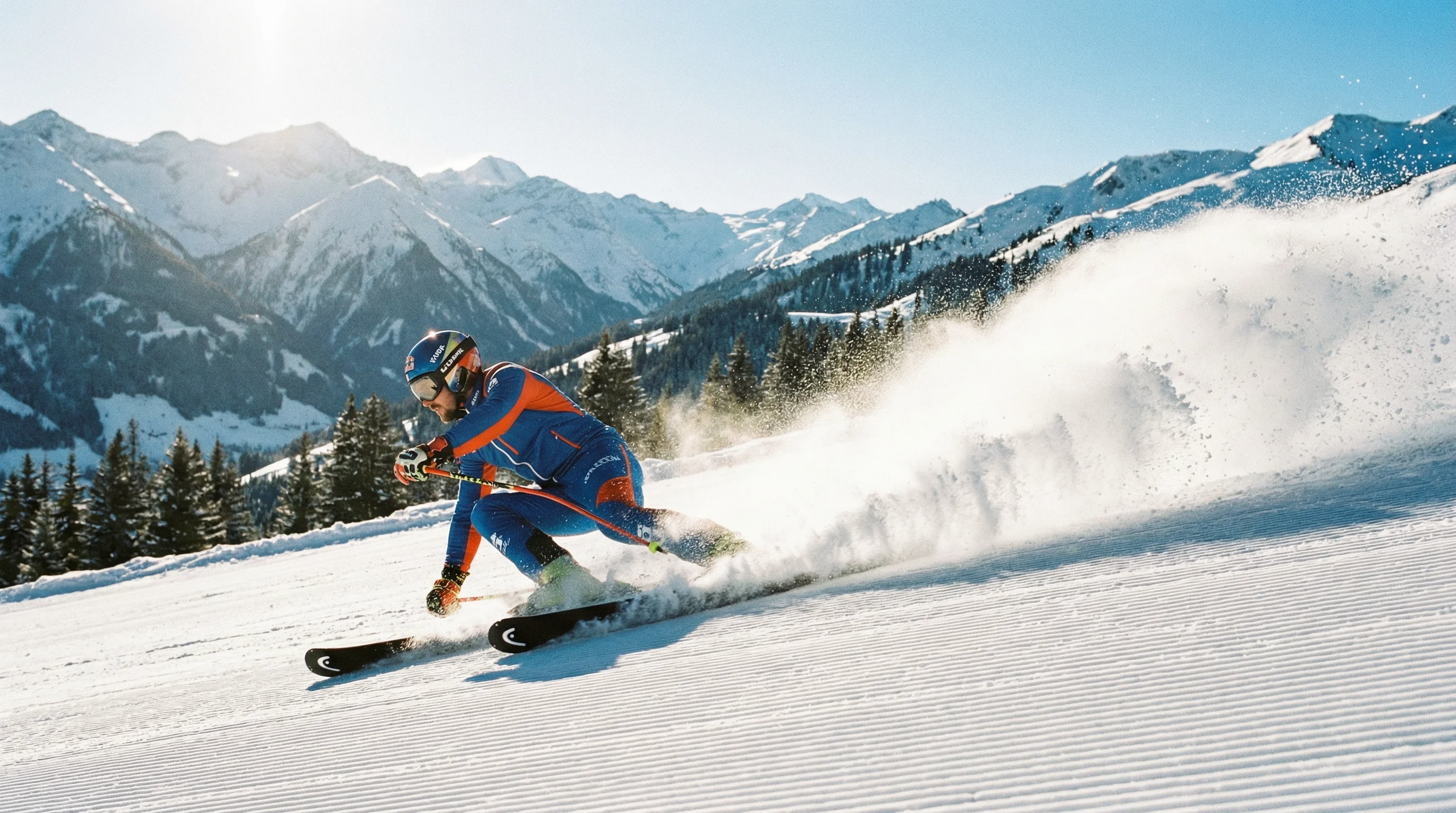
Have you ever watched a professional skier glide down the mountain, leaving behind two perfect, pencil-thin lines in the snow? That, my friend, is the art of carving. It’s a feeling unlike any other in skiing; a sensation of pure, effortless speed and control. It’s the moment you stop fighting the mountain and start working with it, using the design of your skis to create a smooth, powerful arc. If you've been skidding your way down the slopes, making turns that feel more like a controlled slide, then you've come to the right place. This is your ultimate guide to unlocking the secrets of the perfect carved turn.
Carving is more than just a stylish way to descend; it's the most efficient technique for skiing on groomed pistes. Unlike a skidded turn, where the tails of your skis slide outwards, a carved turn involves engaging the edges of your skis to cut into the snow. Think of it like a train on a railway track; the skis follow a precise path, generating speed and momentum through the turn. This technique not only gives you greater control but also opens up a new world of performance, allowing you to tackle steeper terrain and variable conditions with confidence. It's a fundamental skill that separates intermediate skiers from the true experts of the mountain.
In this comprehensive guide, we will break down the mechanics of carving in a simple, easy-to-understand way. We'll cover everything from the essential equipment and the correct body position to a step-by-step guide for executing your first perfect carve. We'll also explore common mistakes and provide you with specific drills to fast-track your progress. By the end of this article, you'll have the knowledge and confidence to start laying down your own railway tracks in the snow and experience the exhilarating feeling of carving like a pro.
What is Carving?
At its core, carving is the act of making a turn using only the sidecut of your skis. Modern skis are designed with an hourglass shape; they are wider at the tip and tail and narrower underfoot. This curved shape is called the sidecut. When you tilt a ski onto its edge and apply pressure, the sidecut naturally bends into an arc, and the ski wants to follow this arc through the snow. A pure carved turn happens when the entire length of the ski's edge follows this path, leaving a clean line without any skidding or sliding.
Imagine you are drawing a perfect 'C' shape in the snow with your skis. In a skidded turn, you push the tails of the skis out to change direction, scrubbing off speed and creating a spray of snow. In a carved turn, you are using pressure and edge angle to make the ski do the work. The result is a much smoother, more efficient turn that actually generates energy and speed. This is why you see ski racers using this technique to achieve maximum velocity. It's a dynamic and powerful way to ski, and once you've mastered it, you'll find it's also a surprisingly efficient way to conserve energy, even though you might be surprised by how many calories skiing can burn.
Essential Equipment for Carving
While it's possible to carve on older, straight skis, modern 'carving' or 'piste' skis have made the technique infinitely more accessible and enjoyable. These skis have a more pronounced sidecut, which means they are much quicker to engage in a turn and require less effort from the skier to hold an edge. If you are serious about learning to carve, investing in a good pair of piste-specific skis will make a world of difference. Look for skis with a waist width of around 68-80mm and a turning radius of between 12-18 metres.
Your ski boots are your connection to your skis, and they play a crucial role in carving. A well-fitting boot that is stiff enough to transfer energy directly from your legs to the ski edges is essential. If your boots are too soft or too big, your movements will be sloppy, and you'll struggle to maintain the precise edge control required for carving. It's worth spending the time and money to get your boots professionally fitted by a qualified boot fitter. This single step can be the most significant upgrade you make to your skiing equipment.
Mastering the Fundamentals: The Carving Stance
Before you can even think about laying down trenches, you need to master the fundamental athletic stance. A solid, balanced body position is the foundation upon which all great carving is built. Your body should be aligned, with your ankles, knees, and hips flexed, ready to absorb terrain and apply pressure to the skis. Your hands should be forward, as if you are carrying a tray, and your eyes should be looking up and ahead, anticipating your next turn.
A common mistake for skiers learning to carve is sitting back. You need to have a forward-leaning stance, with your shins pressed firmly against the front of your boots. This ensures your weight is over the centre of the skis, allowing the sidecut to engage properly. Your upper body should remain calm and generally face down the fall line (the most direct route down the mountain), while your legs do the turning underneath you. This separation of upper and lower body is key to maintaining balance and control throughout the turn.
Step-by-Step Guide to Executing a Carved Turn
Once you have the right equipment and a solid stance, it's time to put it all together. Learning to carve is a process, and it's important to build up gradually. Start on a gentle, wide, well-groomed green or blue run where you have plenty of space.
Step 1: Initiation
The carved turn begins with a smooth and deliberate movement. As you come to the end of one turn, you need to flatten your skis and then gently roll your ankles and knees into the new turn. Imagine you are tipping your skis onto their edges. The goal is to get the skis to start turning with minimal steering input from your feet. Look where you want to go; your body will naturally follow your eyes. This is a crucial step in the journey from snowplough to parallel and beyond.
Step 2: The Apex
As the skis start to cross the fall line, this is where you apply the most pressure. Drive your weight into the outside ski of the turn (which will be your downhill ski at this point). You should feel the edge bite into the snow. The more you commit your weight and the higher the edge angle you can achieve, the tighter the turn will be. Your inside leg should be bent, and your inside ski should be tipped on its edge, mirroring the outside ski. Maintain that forward-leaning stance and feel the G-force build as the ski accelerates through the arc.
Step 3: The Finish
As you complete the turn and start to point your skis across the hill, it's time to release the pressure. Gradually reduce the edge angle by allowing your ankles and knees to relax. This will allow the skis to flatten and start to seek out the new turn. The transition should be smooth and fluid, creating a seamless link from one turn to the next. The goal is to be constantly on an edge, moving from the inside edge of one ski to the inside edge of the other with minimal time spent on the flat base.
Common Carving Mistakes and How to Fix Them
Learning to carve takes practice, and it's normal to make mistakes along the way. Here are some of the most common faults and how to correct them.
Leaning Back
This is the number one enemy of good carving. If you are sitting back, you cannot pressure the front of the skis to engage the sidecut. To fix this, constantly think about pressing your shins into the front of your boots. A great drill is to practice dragging your poles behind you in the snow; this forces you to keep your hands and weight forward.
Skidding Instead of Carving
If you are leaving a wide, brushed track instead of a clean line, you are likely steering with your feet and pushing the tails out. This often happens when skiers are afraid of gaining speed. To fix this, go back to basics on a very gentle slope. Focus on simply tipping the skis on edge and letting them turn by themselves. Trust the design of the ski.
Over-rotating the Upper Body
Many skiers try to turn by throwing their shoulders and hips into the turn. This throws them off balance and makes it impossible to hold a clean edge. Remember, your legs do the turning. Keep your upper body quiet and facing down the hill. A good drill is to hold your poles out in front of you, keeping them level and pointing down the fall line as you make turns underneath.
Drills to Improve Your Carving Technique
To accelerate your learning, incorporate these drills into your practice sessions. They are designed to isolate the key movements of carving.
"J-Turns": On a gentle slope, point your skis straight down the fall line. Pick an edge, either left or right, and gently tip your skis onto that edge. Don't try to turn, just let the sidecut of the ski gradually bring you into a turn and back up the hill, creating a 'J' shape. This helps you feel how the ski's shape creates the turn.
"Garlands": Traverse across the slope. Start to tip your skis up the hill to initiate a turn, but just before your skis point straight down the fall line, flatten them and return to your traverse. This helps you practice the initiation phase and develop fine control over your edges.
One-Legged Skiing: This is a fantastic drill for improving balance and learning to trust your outside ski. Lift your inside ski off the snow as you go through a turn. It's challenging, but it will quickly highlight any balance issues and force you to commit your weight to the all-important outside ski. Mastering this is one of the core advanced ski techniques that will elevate your skiing to the next level, preparing you for more challenging terrain like you might find when you learn how to ski black runs.
While carving is most associated with alpine skiing, it's interesting to note that similar principles of edge control are used in other disciplines. For instance, in a beginner's guide to Telemark skiing, you'll find that while the stance is different, the concept of using the ski's edge to create a smooth arc is still fundamental.
Frequently Asked Questions
What is the difference between carving and parallel skiing?
Parallel skiing is a broad term that simply means skiing with your skis parallel to each other, as opposed to a snowplough or wedge. Carving is a specific type of parallel skiing where the turns are made purely on the edges of the skis, without skidding. You can be a parallel skier without being a carver, but all carvers are parallel skiers.
How long does it take to learn to carve?
A strong intermediate skier who is comfortable on blue and red runs can start to learn the basics of carving in a few days. However, mastering the technique and being able to carve consistently in a variety of conditions can take several weeks or even seasons of dedicated practice. Taking a lesson with a qualified instructor can significantly speed up this process.
Can I carve on any type of ski?
While you can technically initiate a carved turn on most modern skis, it is much easier and more effective on skis designed for on-piste conditions, often called 'carving skis' or 'piste skis'. These skis have a narrower waist and a more pronounced sidecut, which helps them to grip on firm snow and initiate turns more easily. Wide powder skis or park skis are not ideal for learning to carve.
Is carving only for racing?
Absolutely not! While racers use carving to achieve maximum speed, it is an incredibly useful and enjoyable technique for recreational skiers. It provides superior control on groomed runs, is more efficient than skidding, and the feeling of a perfectly executed carved turn is one of the great joys of skiing.
Ready to stop sliding and start carving? The best way to fast-track your progress and ensure you are developing the correct habits is to get feedback from an expert. A qualified ski instructor can analyse your technique, identify your personal roadblocks, and give you tailored drills to help you improve. At findaskischool.com, we make it easy to find and book lessons with top-rated ski schools and instructors all over the world. Take your skiing to the next level and book your carving lesson today!
Find your ski school
Compare schools and instructors in resorts around the world — no booking fees, ever.