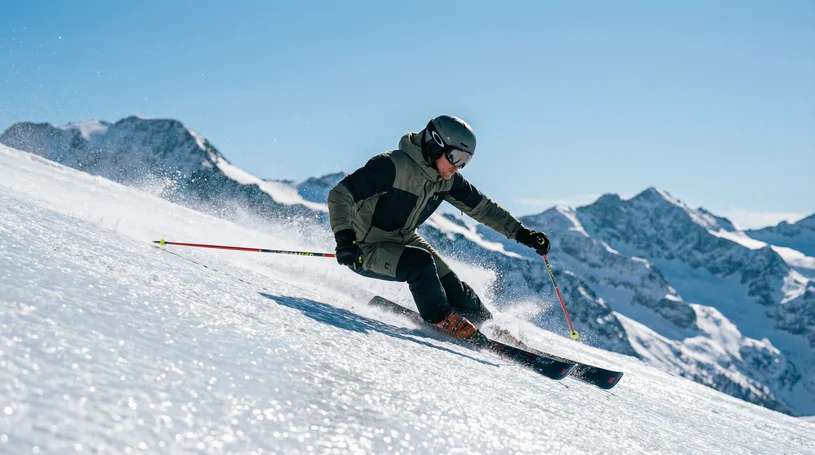
Encountering an icy patch on a ski slope can be a heart-stopping moment for many skiers, from seasoned veterans to those just finding their feet. The sudden loss of grip, the unnerving scraping sound, and the feeling of acceleration can test the nerve of even the most confident individuals. It’s a common misconception that icy conditions are unskiable and should be avoided at all costs. However, with the right knowledge, technique, and a little bit of courage, you can learn to not only manage icy slopes but to conquer them with confidence and style.
Think of skiing on ice not as a barrier to your enjoyment, but as an advanced skill to be mastered. It’s an opportunity to refine your technique, to truly understand the relationship between your body, your skis, and the snow (or lack thereof). Mastering ice will make you a more versatile and competent skier on all types of terrain. It forces you to be precise, balanced, and controlled, all of which are hallmarks of an expert skier. This guide is your trusted companion, filled with advice from experienced instructors to help you transform your fear of ice into a feeling of accomplishment.
In this comprehensive article, we will break down everything you need to know about skiing on ice. We’ll start by looking at the essential equipment preparations, particularly the crucial role of sharp ski edges. Then, we will dive deep into the specific techniques required to maintain control, from your fundamental stance to the fine art of edge engagement and pressure management. We will also address the mental side of the challenge and provide practical drills to build your skills and confidence. By the end, you’ll be equipped with the knowledge to face icy conditions head-on.
Understanding Icy Conditions
Before we can tackle the ice, it helps to understand what it is and why it forms on ski slopes. Ice isn't just one thing; it comes in various forms and is created by several factors. The most common cause is the freeze-thaw cycle. During the day, the sun or warmer temperatures can melt the top layer of snow. When the temperature drops overnight, this melted snow refreezes into a hard, slick layer of ice. This is particularly common on slopes that receive a lot of sun in the morning and are then cast into shadow in the afternoon.
High traffic is another major contributor. As hundreds or thousands of skiers go down the same run, their skis compact the snow, squeezing out the air and eventually polishing the surface into a dense, icy layer. This is why you often find the iciest conditions on the main arteries of a resort, especially at the end of the day. Finally, the type of snow plays a role. Man-made snow, which has a higher water content than natural powder, is more prone to icing over. Ski resorts often use it to build a durable base, but it can result in what skiers grimly refer to as "bulletproof" or "boilerplate" ice—a surface so hard it feels like you're skiing on a frozen lake.
Gearing Up for the Ice
Your success on ice begins before you even click into your bindings. Having the right equipment, properly maintained, is not just an advantage; it’s a necessity. Without it, even a professional skier would struggle to find purchase on a truly icy slope.
The Importance of Sharp Edges
If there is one single piece of advice to take away from this guide, it is this: get your ski edges sharpened. This is non-negotiable for skiing on ice. Your ski edges are the metal strips running down the sides of your skis, and they are designed to cut into the snow to provide grip. On soft snow, even dull edges can offer some purchase. On ice, a dull edge will simply slide and skitter across the surface, offering you no control whatsoever. A sharp edge, however, will bite into the hard surface, allowing you to maintain your line and control your speed.
We recommend getting your skis serviced by a professional technician at the beginning of your ski trip and potentially mid-week if you are skiing for a full week, especially if conditions are consistently firm. You can check the sharpness yourself (carefully!) by running your fingernail over the edge. If it scrapes a little of your nail off, it’s sharp. If it’s smooth, it’s time for a tune-up. For those looking to delve deeper, learning How to Carve on Skis Like a Pro is intrinsically linked to effective edge use, and sharp edges are the foundation of that skill.
Skis and Body Alignment
While any ski can handle ice with sharp edges, some are certainly better suited than others. Skis with a narrower waist (the width under your boot) can transition from one edge to the other more quickly, which is a significant advantage on hardpack. These are often labelled as "piste" or "carving" skis. They are designed for the kind of grip and precision that icy slopes demand. Conversely, very wide powder skis can feel unwieldy and difficult to edge effectively on a firm surface.
Properly fitting ski boots are arguably the most critical piece of ski equipment you own. They are the direct interface between your body and your skis. If your boots are too loose, there will be a delay and a loss of energy between your movements and the ski's reaction. For skiing on ice, you need instant, precise control over your edges. This can only be achieved when your foot is held securely and comfortably, allowing your subtle movements to translate directly to the ski edge. Good body alignment, which is fundamental to all skiing, starts from the ground up with well-fitted boots.
The Art of Skiing on Ice: Technique Breakdown
With your equipment dialled in, the focus shifts to your physical technique. Skiing on ice requires more finesse and precision than blasting through soft powder. It’s about subtle movements, maintaining balance, and understanding how to use your edges as precision tools.
Stance and Balance
Your fundamental athletic stance is your first line of defence. You should have your ankles and knees flexed, feeling pressure on the front of your shins against your boot tongues. This keeps your centre of mass forward and over the middle of your skis. A common and fearful reaction to ice is to lean back, away from the danger. This is the worst thing you can do, as it completely removes pressure from the front of your skis, disengaging the edges and causing you to lose all control. Keep your hands up and in front of you, as if you are carrying a tray. This helps to stabilise your upper body and keep your weight forward. Maintaining this solid, balanced platform is a key step as you progress your skills, especially when moving From Snowplough to Parallel: How to Progress Your Skiing.
Mastering Edge Control
On ice, you cannot rely on the friction of your ski bases to control your speed; it all comes down to the edges. The goal is to get the ski to "bite" into the ice rather than "skid" across it. This is achieved by rolling your ankles and knees into the slope. Imagine you are trying to get the inside of your knee to touch the snow on every turn. This angulation tips the skis onto their edges, engaging them and providing the grip you need. The more you can tip the ski on its edge, the more securely it will hold. Think of it like a sharp knife cutting into a piece of meat; a shallow angle will slide, but a steep angle will cut deep and hold firm.
Turn Shape and Pressure Management
Aggressive, sharp turns are your enemy on ice. Sudden, jerky movements will likely cause your edges to break free. Instead, focus on making smooth, rounded, and complete turns. You need to guide the ski through a full arc, applying pressure smoothly and progressively. As you initiate the turn, gradually increase the pressure on your downhill ski. This is the ski that provides the majority of your grip. Feel the edge bite and hold, and trust it. Ride the arc of the turn, and only when you have controlled your speed and are ready for the next one should you begin to release that pressure and transition to the new turn. It’s a continuous, flowing motion, not a series of abrupt stop-start movements. This controlled approach to skiing not only helps on ice but also has benefits for your overall fitness, which might surprise you when you discover How Many Calories Does Skiing Burn? The Surprising Truth.
Mental Fortitude: Conquering the Fear
We cannot overstate the importance of the mental game when skiing on ice. The physical techniques are vital, but they are useless if your mind is gripped by fear. Your body will tense up, you’ll lean back, and your eyes will fixate on the very thing you’re trying to avoid. The first rule is to look where you want to go. Pick a spot further down the slope, on the other side of the icy patch, and focus on skiing towards it. Your body will naturally follow your eyes.
Accept that you will hear some noise. The scraping and chattering of skis on ice is unnerving, but it’s normal. Try to reinterpret it as the sound of your sharp edges doing their job. Breathe. A calm mind leads to a relaxed and responsive body. Start small. Don’t try to tackle the steepest, iciest black run on your first attempt. Find a gentle slope with a small patch of ice and practise your technique. Build your confidence gradually. Every successful turn on an icy patch is a victory that reprograms your brain to replace fear with confidence. While it’s a different discipline, the focus required is similar to that in A Beginner's Guide to Telemark Skiing, which also demands immense balance and mental control.
Frequently Asked Questions
Is it dangerous to ski on ice?
It can be more challenging, and the risk of falling is higher if you are unprepared. A fall on a hard, icy surface is more likely to cause injury than a fall in soft snow. However, by ensuring your skis have sharp edges and by using the correct, controlled techniques described above, you can significantly mitigate the risks and learn to ski on ice safely.
What is the best way to stop on an icy slope?
Stopping on ice requires the same technique as on snow, but with more precision. You need to bring your skis parallel across the fall line and aggressively engage your edges by rolling your knees and ankles into the hill. It will take longer to stop than in soft snow, so you must anticipate your stop much earlier. Avoid turning sharply or trying to snowplough stop, as this will likely cause your skis to skid out from under you.
Should I wax my skis for icy conditions?
Waxing is primarily for glide, not grip. While having the correct temperature wax is always good for the health of your skis and for smooth gliding over any non-icy sections, it has no direct impact on your ability to grip on ice. Your grip comes exclusively from your edges. Therefore, prioritising sharpening over waxing is far more important for icy conditions.
Facing icy slopes can be daunting, but it is a challenge that every dedicated skier should embrace. It’s a true test of your technique and a direct path to becoming a more skilled and confident skier in all conditions. By focusing on sharp edges, a forward stance, and smooth, controlled edge engagement, you can turn icy runs from terrifying obstacles into satisfying achievements.
Ready to put these skills to the test and take your skiing to the next level? The best way to build confidence on ice is with expert guidance from a qualified instructor. They can provide real-time feedback and tailored drills to help you master the mountain. Use Find a Ski School to search for and book the perfect ski lesson or instructor at your favourite resort, and turn your icy fears into finely carved turns.
Find your ski school
Compare schools and instructors in resorts around the world — no booking fees, ever.