Planning a ski holiday is an exhilarating experience. The thought of crisp mountain air, stunning alpine scenery, and the thrill of gliding down snow-covered slopes is enough to get anyone excited. However, for many, especially those new to the sport, the excitement can be tinged with a bit of apprehension, particularly when it comes to ski equipment. What do you need? Should you buy or rent? How do you know if you're getting the right gear? It can feel like a daunting puzzle, but it doesn't have to be.
Navigating the world of ski rentals can seem complex, with its own jargon and a bewildering array of choices. But understanding the basics is the first step towards a comfortable, safe, and enjoyable time on the mountain. Making informed decisions about your equipment will not only boost your confidence but also accelerate your learning curve. This guide is here to demystify the process, providing you with the knowledge and confidence to rent your ski gear like a seasoned pro. We'll break down everything from the benefits of renting to the nitty-gritty of the fitting process.
Think of this guide as your personal ski instructor, offering friendly and authoritative advice before you even set foot in the rental shop. We'll cover the types of equipment available, how to choose the right package for your ability level, and what to expect when you get fitted. By the end, you'll be fully equipped to make the best choices for your needs, ensuring your focus remains on the fun part: skiing. And for those just starting their journey, our comprehensive article on How to Ski for the First Time: Everything You Need to Know is the perfect companion to this rental guide.
Why Rent Skis Instead of Buying?
For anyone new to skiing or for those who only hit the slopes once or twice a year, renting equipment is almost always the most sensible and economical choice. The initial outlay for a full set of new ski gear—skis, boots, bindings, and poles—can run into hundreds, if not thousands, of pounds. Renting allows you to access all the necessary equipment for a fraction of the cost, freeing up your holiday budget for other essentials, like lift passes and well-deserved après-ski treats. If you're curious about how costs can add up, our Ski Pass Prices in Europe: A Complete Guide for 2026 offers a great overview of one of the major expenses.
Beyond the significant cost savings, renting offers unparalleled convenience. Travelling with ski equipment can be a logistical nightmare. It's bulky, heavy, and often incurs extra baggage fees on flights. By renting at your destination, you can travel light and stress-free, knowing that your gear will be waiting for you when you arrive. Furthermore, rental shops are typically located right in the resort, often at the base of the mountain, making it easy to pick up and drop off your equipment. Many services even offer delivery directly to your accommodation.
Another key advantage of renting is the opportunity to use the latest models and technology. The ski industry is constantly innovating, and rental shops regularly update their inventory. This means you can try out different types of skis as your ability improves, or even test a specific model you're considering buying in the future. It's the ultimate 'try before you buy' experience. Finally, rental equipment is professionally maintained. The skis are waxed, the edges are sharpened, and the bindings are tested before each rental, ensuring optimal performance and, most importantly, your safety on the slopes.
What Equipment Can You Rent?
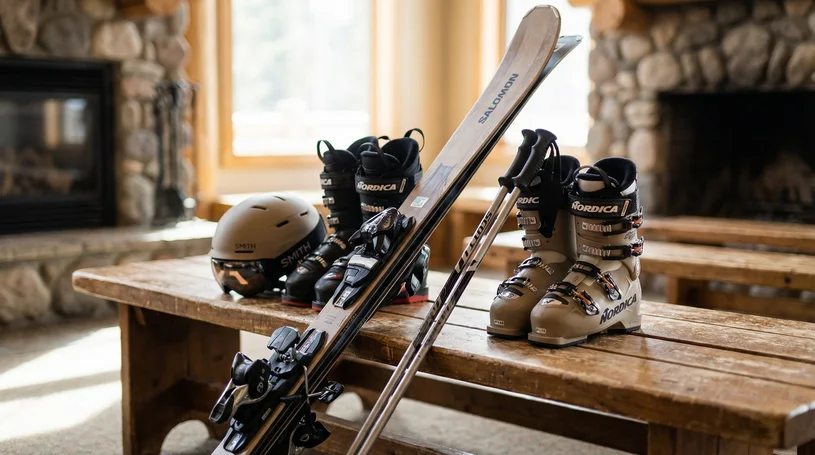
The standard ski rental package provides the holy trinity of ski gear: skis, boots, and poles. These are the absolute essentials for getting you on the snow. The skis will come with bindings already mounted, which will be adjusted for you in the shop. However, the rental options don't stop there. Most shops offer a range of other crucial items that you can add to your rental, either individually or as part of a more comprehensive package.
Helmets are arguably the most important piece of safety equipment you can wear, and they are available to rent at every ski shop. While not always mandatory, wearing a helmet is strongly recommended for all skiers, regardless of ability level. They provide essential protection and peace of mind. You can also often rent ski clothing, such as jackets and salopettes, which is ideal for first-timers who don't want to invest in expensive outerwear before they've committed to the sport.
Additionally, you can rent other accessories like ski goggles. Having the right eyewear is critical for visibility and protection from the elements. A good pair of goggles will protect your eyes from UV rays, wind, and snow, and the lens colour can significantly impact your ability to see the contours of the slope in different light conditions. To learn more about this, be sure to read our in-depth Ski Goggles Guide: How to Choose the Right Lens. While you generally can't rent smaller items like gloves or base layers for hygiene reasons, the core equipment to get you started is readily available.
The Ski Rental Process: A Step-by-Step Guide
Walking into a ski rental shop for the first time can be a bit overwhelming, but the process is actually very straightforward. The staff are there to help and will guide you through each stage.
1. Pre-booking vs. In-Resort Rental
You have two main options: pre-book your equipment online before you travel or rent it once you arrive in the resort. Pre-booking often comes with a discount and guarantees that the equipment you need will be available, which is particularly useful during peak holiday weeks. It also saves time, as your details will already be in the system. Renting in the resort gives you the flexibility to shop around, but you may pay a premium for the convenience.
2. Providing Your Details
The technician will need some key information to select the right equipment for you. Be prepared to provide your:
- Height and Weight: These are used to determine the correct ski length and to set the release tension on your bindings.
- Age: This is also a factor in the binding release setting calculation.
- Shoe Size: This is the starting point for finding the right ski boots.
- Skier Ability Level: Be honest! This is crucial for your safety and enjoyment. The categories are typically:
- Beginner (Type 1): You are new to skiing or ski cautiously on gentle slopes.
- Intermediate (Type 2): You are confident on green and blue runs and are starting to explore reds.
- Advanced/Expert (Type 3): You ski confidently and aggressively on all terrain, including black runs and off-piste.
3. The Fitting Process
This is the most hands-on part of the process. A technician will select your gear based on the information you've provided.
- Boots: This is the most critical component. The technician will measure your feet and select a boot. When you try it on, you should wear only one pair of thin ski socks. Your toes should just about touch the end of the boot when you're standing up straight, and pull back slightly when you flex forward into a 'ski-ready' stance. The boot should feel snug all over, without any specific pressure points. Don't be afraid to speak up if it doesn't feel right. For a deep dive into this crucial topic, our How to Choose the Right Ski Boots: A Fitting Guide is an essential read.
- Skis: The technician will select a pair of skis appropriate for your height and ability level. For beginners, skis are typically shorter (around chin height) as they are easier to turn and control. More advanced skiers will use longer skis for greater stability at speed.
- Poles: To find the correct pole length, flip a pole upside down and hold it underneath the basket. Your elbow should be at a 90-degree angle.
- Bindings: Finally, the technician will mount your boots into the bindings on the skis and adjust the DIN setting (the release tension) based on your height, weight, age, and ability level. This is a critical safety feature that determines how easily your boot will release from the ski in the event of a fall.
On-Slope Checks and Adjustments
Once you have your equipment, your job isn't quite done. The first few runs are a chance to test everything out. How do the boots feel after an hour? Are they still snug, or have they loosened up? Are you experiencing any pain or pressure points? Most rental shops are more than happy for you to come back and make adjustments or even swap out your boots if they aren't working for you. A good shop wants you to be comfortable.
Don't be a hero and try to ski through the pain of ill-fitting boots. It's the fastest way to ruin a ski day, and potentially your entire holiday. A simple adjustment or a different pair of boots can make a world of difference. The same goes for your skis. If you feel they are too long, too short, or just not right for the conditions, don't hesitate to go back to the shop and discuss it with the technicians. Their goal is to ensure you have the best possible experience on their equipment.
Frequently Asked Questions
What is the difference between beginner, intermediate, and advanced rental skis?
Beginner skis are typically softer, shorter, and more flexible, making them easier to turn and more forgiving of mistakes. Intermediate skis are a bit stiffer and offer better edge grip and stability as you start to ski faster and on more challenging terrain. Advanced or performance skis are the stiffest and most responsive, designed for high speeds, carving, and expert-level control on all types of snow.
How much does it cost to rent ski equipment?
The cost can vary significantly depending on the country, the resort, the time of year, and the level of equipment you choose. On average, you can expect to pay anywhere from £15-£25 per day for a standard beginner package (skis, boots, poles) to £40-£60 per day for a premium, high-performance setup. Booking for a full week almost always works out cheaper per day than renting on a daily basis.
Should I rent a helmet?
Absolutely, yes. We cannot recommend this enough. Skiing, like any sport, carries an inherent risk of falling, and a helmet is the single most effective piece of equipment for protecting your head from injury. Modern helmets are lightweight, comfortable, and warm, and there is simply no good reason not to wear one. All rental shops offer them for a small additional fee.
Can I swap my equipment if I'm not happy with it?
Yes, any reputable ski rental shop will allow you to swap your equipment. This is most common with ski boots, as comfort is paramount. If you experience any pain or discomfort, go back to the shop as soon as possible. They can help you with adjustments or provide a different size or model of boot. Your comfort and safety are their priority.
Now that you're an expert on renting ski equipment, the next step is to put that knowledge into practice. The mountains are calling! Whether you're a complete beginner or an experienced skier looking to improve, the right instruction can transform your holiday. At findaskischool.com, we make it easy to browse, compare, and book lessons with top-rated ski schools and instructors in resorts across the globe. Take the guesswork out of finding the perfect coach and Find a Ski School with us today. Your alpine adventure awaits!
Find your ski school
Compare schools and instructors in resorts around the world — no booking fees, ever.