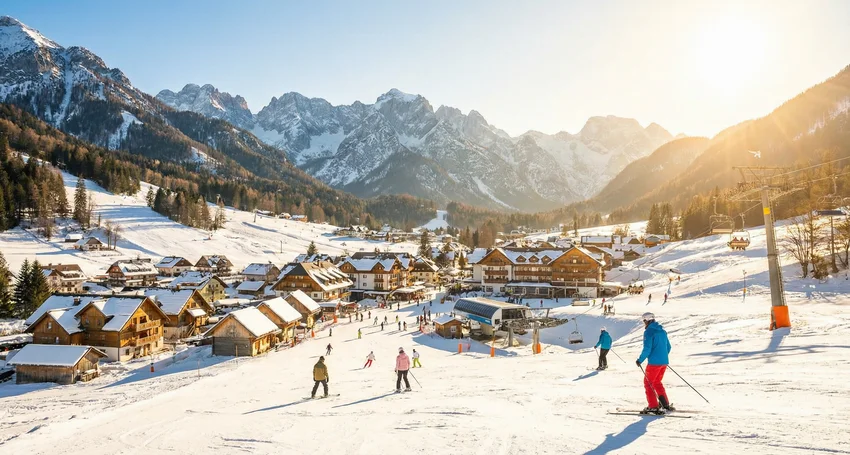
For too long, the Alps have dominated the European ski scene, their glamorous resorts and eye-watering prices setting the standard for a winter holiday. But beyond the chic chalets of Courchevel and the bustling streets of St. Anton, a different kind of ski adventure awaits. Eastern Europe, with its dramatic mountain ranges, rich history, and incredible value for money, is quietly emerging as a premier destination for skiers and snowboarders seeking something unique. From the vibrant party scene of Bulgaria to the fairytale landscapes of Slovenia, this region offers an unforgettable experience without the hefty price tag.
Forget everything you think you know about budget skiing. The resorts of Eastern Europe are not the poor cousins of their Alpine counterparts. Significant investment in recent years has transformed the infrastructure, with modern lift systems, extensive snowmaking capabilities, and a wide variety of accommodation options now the norm. Here, you’ll find world-class skiing and snowboarding, vibrant après-ski scenes, and a warm, welcoming culture that will make you feel right at home. Whether you're a complete beginner looking for affordable lessons or a seasoned expert in search of challenging off-piste terrain, Eastern Europe delivers in spades.
This guide will take you on a journey through two of the region's most exciting ski destinations: Bulgaria and Slovenia. We'll explore the best resorts, from the bustling slopes of Bansko to the tranquil beauty of Vogel. We'll delve into the local ski school systems, uncover the best times to visit for optimal snow, and provide a comprehensive budget guide to help you plan your trip. So, pack your bags and prepare to discover the hidden gems of Eastern European skiing.
Why Ski in Eastern Europe?
The allure of the Alps is undeniable, but Eastern Europe offers a compelling alternative with its own unique set of advantages. The most obvious draw is the exceptional value for money. Everything from lift passes and accommodation to food and drink is significantly cheaper than in the major Alpine resorts. This makes it an ideal choice for families, students, or anyone looking to enjoy a fantastic ski holiday without breaking the bank. A pint of beer for a couple of euros? You’ve got it. A hearty three-course meal for under £20? No problem. Your holiday budget will stretch much further here, allowing you to ski more, relax more, and worry less.
But it’s not just about the price. The quality of the skiing is genuinely impressive. Bulgaria’s Pirin and Rila mountains and Slovenia’s Julian Alps offer vast and varied terrain to suit all abilities. You’ll find everything from gentle nursery slopes for beginners to challenging black runs and extensive off-piste opportunities for the more adventurous. The resorts are also known for their lively and unpretentious après-ski culture. The atmosphere is friendly and inclusive, with a focus on good times and good company. Forget stuffy dress codes and overpriced cocktails; think bustling bars, live music, and a party that often continues late into the night.
Finally, a ski trip to Eastern Europe is an opportunity to immerse yourself in a rich and fascinating culture. These are countries with a deep and complex history, and this is reflected in the architecture, the food, and the local traditions. You can combine your time on the slopes with visits to ancient monasteries, historic towns, and thermal spas. It’s a chance to experience a different side of Europe, one that is both authentic and incredibly rewarding.
Top Ski Resorts in Eastern Europe
Eastern Europe is dotted with fantastic ski resorts, but for this guide, we’re focusing on the best of Bulgaria and Slovenia – two countries that perfectly encapsulate the region's appeal.
Bansko, Bulgaria
Nestled at the foot of the majestic Pirin Mountains, a UNESCO World Heritage site, Bansko is Bulgaria’s largest and most modern ski resort. It has rapidly become one of the most popular budget ski destinations in Europe, and for good reason. The resort boasts a state-of-the-art lift system, 75km of well-groomed pistes, and a legendary après-ski scene. The ski area, which sits between 990m and 2,600m, offers reliable snow cover throughout the season and a good mix of runs for all levels. Beginners will find excellent nursery slopes at the top of the gondola, while intermediates can cruise the long, sweeping blue and red runs. For experts, the Alberto Tomba black run is a real leg-burner, and the resort is gaining a reputation for its excellent and easily accessible off-piste terrain.
The town of Bansko itself is a charming blend of old and new. The modern resort area is packed with hotels, apartments, bars, and restaurants, while the historic old town offers a glimpse into Bulgaria’s past with its cobbled streets and traditional stone houses, known as ‘mehanas’. These mehanas serve up delicious, hearty Bulgarian cuisine at incredibly low prices. The après-ski scene in Bansko is famous for its energy and affordability. You can enjoy a beer on the slopes for a fraction of the price you’d pay in the Alps, and the party continues in the town’s many bars and clubs until the early hours. For those seeking lessons, our Ski Schools in Bansko: A Complete Guide to Lessons & Instructors provides all the information you need.
Borovets, Bulgaria
As Bulgaria’s oldest ski resort, Borovets has a long and storied history. Set amidst the pine forests of the Rila Mountains, it has a more traditional, village-like feel than Bansko. The resort is divided into three distinct ski centres: the central Borovets area, the Yastrebets area, and the Markudjik area, which together offer 58km of pistes. The Markudjik centre is the highest, with slopes reaching up to 2,550m, ensuring good snow conditions. Borovets is particularly well-suited to intermediates, with a fantastic network of red runs that wind their way through the trees. Beginners are also well catered for with gentle slopes at the base of the resort.
Borovets is renowned for its lively, fun-loving atmosphere. The resort was originally developed as a hunting ground for Bulgarian kings, and it has retained a sense of rustic charm. The centre is compact and easy to navigate, with a wide selection of bars and restaurants clustered around the main street. The après-ski here is legendary, with a reputation for being cheap, cheerful, and incredibly fun. It’s a place where you can let your hair down and enjoy the friendly, party atmosphere. For a change of pace, you can try night skiing, which is available on several of the lower slopes, or explore the surrounding area on a snowmobile safari.
Pamporovo, Bulgaria
Pamporovo, located in the heart of the Rhodope Mountains, is the sunniest ski resort in Bulgaria. It’s a fantastic choice for families and beginners, thanks to its gentle, tree-lined slopes and excellent ski school. The resort has over 37km of pistes, the majority of which are cruisey blues and gentle greens, making it the perfect place to build confidence. The ski area is known for its beauty, with runs that meander through dense pine forests, offering stunning views of the surrounding landscape. While it may not have the challenging terrain of Bansko or Borovets, there are a few red and black runs to keep more advanced skiers entertained.
The atmosphere in Pamporovo is relaxed and family-friendly. The resort has a good selection of hotels, many of which have swimming pools and spa facilities – perfect for soothing tired muscles after a day on the slopes. The town itself is small and welcoming, with a range of restaurants serving both local and international cuisine. Pamporovo is also an excellent base for exploring the rich culture and history of the Rhodope region. You can visit the nearby town of Shiroka Laka, with its beautifully preserved traditional architecture, or explore the dramatic Trigrad Gorge.
Kranjska Gora, Slovenia
Moving across to the Julian Alps, Kranjska Gora is Slovenia’s most famous and extensive ski resort. Located in the stunningly beautiful Upper Sava Valley, close to the borders of Austria and Italy, it offers a world-class ski experience in a breathtaking setting. The resort is a regular host of FIS World Cup slalom and giant slalom races, a testament to the quality of its slopes. With 20km of pistes, it’s not the largest resort, but it packs a lot in, with a variety of runs for all abilities. The lower slopes are perfect for beginners, while intermediates and experts will relish the challenge of the Podkoren run, where the World Cup races are held.
Kranjska Gora is a charming Alpine village with a friendly, relaxed atmosphere. The village square is the heart of the resort, with its picturesque church and a selection of cosy bars and restaurants. The resort is particularly popular with families, thanks to its excellent facilities for children, including a dedicated snow fun park. Beyond the slopes, there are plenty of activities to enjoy. You can try cross-country skiing on the 40km of prepared tracks, go ice skating on the natural rink, or take a magical horse-drawn sleigh ride through the snow-covered forests. Its proximity to other countries also makes it a great base for exploring, with the beautiful city of Ljubljana just an hour’s drive away.
Vogel, Slovenia
For those who value scenery above all else, Vogel is hard to beat. Perched high above the serene Lake Bohinj in the Triglav National Park, this resort offers some of the most spectacular views in all of Europe. The ski area is accessed by a cable car that whisks you up to 1,535m, where you are greeted by a panorama of snow-capped peaks stretching as far as the eye can see. Vogel is known for its excellent natural snow record, often holding the best snow in Slovenia. The 22km of pistes are best suited to intermediates, with a great selection of wide, open red runs.
The experience at Vogel is one of tranquility and natural beauty. Being in a national park, development is limited, which has preserved the area’s pristine character. There are a few mountain huts and a hotel at the top of the cable car, but most visitors stay in the villages dotted around Lake Bohinj below. This creates a peaceful, get-away-from-it-all atmosphere. It’s the perfect choice for those who want to connect with nature and enjoy skiing in a truly awe-inspiring setting. After a day on the slopes, you can take a walk along the frozen shores of the lake or enjoy a traditional Slovenian meal in one of the local inns.
Krvavec, Slovenia
Krvavec is another gem in the Slovenian ski scene, and it holds the distinction of being the closest major ski resort to an international airport in Europe. Just 8km from Ljubljana’s airport, you can be on the slopes within an hour of landing. The resort offers 30km of well-maintained pistes and boasts a modern and efficient lift system. The ski area, which ranges from 1,450m to 1,971m, has a great mix of terrain. There are plenty of wide, cruising runs for intermediates, a dedicated snow park for freestyle enthusiasts, and some surprisingly challenging black runs for the experts.
Because of its proximity to the capital, Krvavec is popular with both locals and international visitors, which gives it a vibrant and cosmopolitan feel. The resort has a lively atmosphere, with several bars and restaurants on the mountain where you can enjoy a drink and soak up the sun on a terrace with stunning views. While there is some accommodation on the mountain, many visitors choose to stay in the vibrant city of Ljubljana, combining a city break with a ski holiday. This offers the best of both worlds: world-class skiing by day and the cultural attractions, restaurants, and nightlife of a capital city by night.
Ski Schools and Lessons in Eastern Europe
One of the biggest advantages of skiing in Eastern Europe is the affordability and quality of the ski schools. Whether you're a first-timer or an experienced skier looking to refine your technique, you'll find that the instruction is excellent and the prices are a fraction of what you’d pay in the Alps. The instructors are typically well-qualified, holding national or internationally recognised certifications, and many are multilingual, with English being widely spoken.
In Bulgaria, the ski schools in resorts like Bansko and Borovets are large and well-organised. They offer a wide range of group and private lessons for all ages and abilities. Group lessons are a great way to learn in a sociable environment and are incredibly cost-effective. Private lessons offer more personalised instruction and are ideal for those who want to progress quickly. In Slovenia, the ski schools are also of a high standard, with a strong focus on technique and safety. You can expect to pay around €150-€200 for a week of group lessons (2-4 hours per day), while a one-hour private lesson will typically cost between €40 and €60. To make finding the right instruction easier, you can Find a Ski School through our platform, ensuring you get the best possible start to your skiing journey.
Best Time to Visit
The ski season in both Bulgaria and Slovenia generally runs from mid-December to mid-April. The best time to visit depends on your priorities. For the most reliable snow cover and the best chance of powder days, the peak months of January and February are your safest bet. This is when the temperatures are at their coldest and the snow base is at its deepest. However, this is also the busiest and most expensive time to travel, coinciding with school holidays across Europe.
If you’re looking for a bargain and don’t mind slightly less predictable conditions, consider travelling in early December or late March. The slopes will be quieter, and you’ll find great deals on flights and accommodation. March, in particular, can be a fantastic time to ski, with longer, sunnier days and a fun, spring-like atmosphere. It’s worth keeping an eye on the snow reports, as a late-season snowfall can provide some of the best conditions of the year. For those on a tight budget, avoiding the peak New Year and February half-term weeks is crucial.
Getting There
Both Bulgaria and Slovenia are well-connected and easy to reach from the UK and other parts of Europe. For Bulgaria, the main gateway is Sofia Airport (SOF), which is served by numerous low-cost airlines. From Sofia, it’s a 2.5 to 3-hour transfer to Bansko and around 1.5 hours to Borovets. Plovdiv Airport (PDV) is another option, particularly for Pamporovo, with a transfer time of about 1.5 hours. There are plenty of transfer companies offering shared or private minibuses from the airports to the resorts, which can be pre-booked online.
For the Slovenian resorts, Ljubljana Jože Pučnik Airport (LJU) is the main entry point. As mentioned, Krvavec is incredibly close, just a 15-minute drive away. Kranjska Gora is about a 45-minute drive, and Vogel (Lake Bohinj) is around an hour away. Again, airport transfers are readily available and are the most convenient way to get to your resort. For those who prefer more flexibility, hiring a car is a great option, especially in Slovenia, where the roads are well-maintained and the resorts are relatively close to each other. This allows you to explore the surrounding area and even visit multiple resorts during your trip.
Budget Guide
This is where Eastern Europe truly shines. The cost of a ski holiday here can be less than half of what you’d pay for a comparable trip to the French or Swiss Alps. Here’s a rough breakdown of what you can expect to pay:
- Lift Passes: A six-day lift pass in a major Bulgarian or Slovenian resort will typically cost between €200 and €250. This is significantly cheaper than the €350-€400+ you’d pay in a top Alpine resort. Our Ski Pass Prices in Europe: A Complete Guide for 2026 offers a detailed comparison.
- Accommodation: There is a huge range of accommodation to suit all budgets, from self-catered apartments and budget hotels to luxurious spa hotels. You can find a week’s stay in a decent apartment for as little as £200 per person, while a week in a 4-star hotel might cost around £400-£600 per person.
- Food and Drink: Eating and drinking out is incredibly cheap. A pint of local beer will cost you around €2-€3, and a hearty meal in a traditional restaurant can be had for €10-€15. Even on the mountain, prices are very reasonable.
- Ski Lessons: As mentioned earlier, ski lessons offer fantastic value. A week of group lessons will set you back around €150-€200.
All in all, you could have a fantastic week-long ski holiday in Eastern Europe, including flights, transfers, accommodation, lift pass, and spending money, for under £800 per person, especially if you avoid the peak weeks. This represents incredible value and makes skiing accessible to a much wider range of people.
Tips for Skiing in Eastern Europe
- Embrace the Culture: Don’t just stick to the resort. Take the time to explore the local towns, try the traditional food, and learn a few words of the local language. It will enrich your holiday experience.
- Be Patient: While the infrastructure has improved massively, you may still encounter some older, slower lifts. See it as part of the charm and a chance to rest your legs.
- Cash is King: While cards are widely accepted in hotels and larger restaurants, it’s always a good idea to have some local currency on you for smaller bars, cafes, and shops.
- Check the Snow Report: Snow conditions can be more variable than in the high-altitude Alpine resorts. Keep an eye on the forecast and be prepared to be flexible with your plans.
- Book in Advance: While it’s a budget destination, the resorts are popular. To get the best deals on flights and accommodation, it’s always best to book as far in advance as possible.
Frequently Asked Questions
Is Eastern Europe good for beginner skiers?
Absolutely. Resorts like Pamporovo in Bulgaria and Kranjska Gora in Slovenia are perfect for beginners. They have excellent nursery slopes, a high percentage of gentle green and blue runs, and the ski schools are fantastic and affordable. It’s one of The Best Ski Resorts for Beginners in Europe.
What is the après-ski like?
The après-ski in Eastern Europe, particularly in Bulgaria, is legendary. It’s lively, unpretentious, and incredibly cheap. You’ll find a huge range of bars and clubs, with a party atmosphere that often continues late into the night. It’s less about champagne and fur coats and more about beer and good times.
Is it safe to ski in Eastern Europe?
Yes, it is very safe. The resorts are well-managed, the slopes are well-groomed, and mountain rescue services are on hand. As with any ski holiday, it’s important to have appropriate travel insurance that covers winter sports. It’s also wise to ski within your limits and be aware of the mountain environment.
Ready to explore the incredible value and vibrant culture of Eastern Europe’s ski scene? From the party slopes of Bulgaria to the scenic splendour of Slovenia, a unique and affordable adventure is waiting for you. Use findaskischool.com to browse and book the best ski schools and instructors in the region, and take the first step towards an unforgettable winter holiday.
Find your ski school
Compare schools and instructors in resorts around the world — no booking fees, ever.