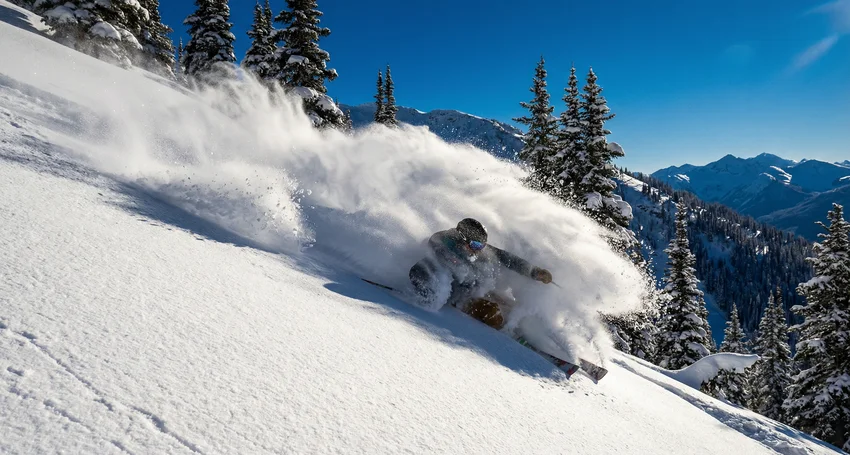
There are few feelings in the world that compare to floating effortlessly through untouched, deep powder. For many skiers, it’s the ultimate goal, the pinnacle of the sport. It’s that feeling of weightlessness, the silence of the mountain broken only by the soft swoosh of your skis, and the face shots of cold smoke that keep us coming back for more. But for those new to it, skiing in powder can feel less like floating and more like flailing. Instead of graceful turns, you might find yourself sinking, getting stuck, and wondering what all the fuss is about.
If you’ve mastered the groomed pistes and are looking for your next challenge, you’ve come to the right place. This guide is your personal instruction manual for conquering deep snow. We’ll break down the techniques, the gear, and the mindset you need to transform from a powder sceptic into a powder hound. It’s a journey that takes practice, patience, and a willingness to embrace a completely different way of interacting with the snow. Forget everything you thought you knew about hard-packed groomers; powder is a different beast entirely, but a wonderfully rewarding one to tame.
In this comprehensive guide, we’ll cover everything from the fundamental physics of why you need to ski differently in deep snow to the specific drills you can practice to hone your skills. We’ll explore the right equipment that can make your life infinitely easier, common mistakes to avoid, and how to stay safe while you’re out there chasing the perfect turn. Get ready to unlock the secrets of deep snow and discover the pure joy of powder skiing.
Understanding Powder: More Than Just Soft Snow
Before we dive into technique, it’s crucial to understand what powder is and why it behaves so differently from the compacted snow on a groomed run. On a piste, the snow is packed down by machines, creating a firm, predictable surface. Your skis glide on top of this surface, and you use your edges to grip and carve turns. In powder, your skis are in the snow, not on it. The snow is a three-dimensional medium, and this changes everything.
The key difference is resistance. Powder provides significantly more resistance than a groomer. This resistance is what can cause your ski tips to dive, your legs to burn, and your speed to vanish if you use the wrong technique. However, this same resistance, when managed correctly, is what allows you to float and bounce, creating that signature weightless feeling. It’s not about fighting the snow; it’s about working with it.
Types of Powder
Not all powder is created equal. The consistency of the snow can vary dramatically based on temperature, humidity, and wind. ‘Champagne powder’, famously found in places like Utah and Japan, is incredibly light and dry, with a low water content. This is the dream scenario, offering maximum float and that classic face-shot experience. On the other end of the spectrum is heavy, wet powder, often found in coastal mountain ranges or during warmer storms. This ‘mashed potato’ snow is denser, provides more resistance, and requires more effort to ski. Understanding the type of powder you’re in will help you adjust your technique accordingly.
Essential Gear for Powder Skiing
While a great skier can ski powder on any ski, the right equipment makes the learning process and the overall experience significantly more enjoyable. Modern ski technology has made powder skiing more accessible than ever before.
Powder Skis: Your Best Friend in Deep Snow
The single most important piece of gear for deep snow is a pair of powder skis. These are typically much wider underfoot than your standard piste skis (often 100mm or wider). This increased surface area creates more float, helping you stay on top of the snow rather than sinking into it. Many powder skis also feature a ‘rocker’ profile, where the tips and sometimes the tails are raised, similar to the hull of a boat. This design helps the skis plane up and out of the snow, preventing the tips from diving and making turning feel much more intuitive and surf-like.
Boots and Bindings
Your boots should be comfortable and provide good support, but there’s no need for a specific ‘powder boot’. The most important thing is a good fit. Your bindings should be appropriate for the width of your skis and set to the correct DIN setting for your height, weight, and ability level. If you plan on venturing into the backcountry, you’ll need specific touring bindings that allow your heel to lift for uphill travel.
Safety Equipment: The Essential Trio
If your powder adventures take you beyond the resort boundaries into uncontrolled terrain, avalanche safety equipment is non-negotiable. The essential trio consists of an avalanche transceiver (beacon), a shovel, and a probe. More importantly, you must know how to use them. Taking an avalanche safety course is a critical step for any aspiring backcountry skier. Even within a resort, skiing in deep snow, especially in treed areas, carries inherent risks like tree wells. Always ski with a partner and keep them in sight.
The Fundamental Techniques of Powder Skiing
This is where the magic happens. Mastering powder technique is about reprogramming your muscle memory from the piste. It’s about being patient, fluid, and balanced.
Stance and Balance: Finding Your Centre
On a groomer, you’re often told to pressure the front of your boots and drive your shins forward. In powder, this will send your tips diving. Instead, you need a more centred and balanced stance. Your weight should be distributed evenly across the length of both skis. Think about standing in the middle of your feet, not on your toes or heels. Keep your hands forward and your body upright. A narrow stance, with your skis closer together than on a piste, helps them act as a single platform to float on.
The "Bouncing" Motion: Using Rebound to Your Advantage
Turning in powder is less about edging and more about a rhythmic up-and-down motion. As you finish one turn, you flex your ankles and knees, pushing down into the snow. The snow compresses and then pushes back, creating a rebound effect that helps lift you and your skis up. It’s in this moment of ‘weightlessness’ that you can pivot your feet and legs to initiate the next turn. Think of it as a gentle bounce, like you’re on a trampoline. This rhythmic motion is the key to linking smooth, effortless turns.
Steering with Your Feet and Legs
Because your edges are less effective in deep snow, you need to steer using your whole leg. The turn should be initiated from your feet and legs, rotating them in the direction you want to go. Your upper body should remain calm and facing down the fall line (the most direct path down the mountain). This separation of upper and lower body is crucial for maintaining balance and control. Many skiers find it helpful to imagine they have headlights on their hips, and they need to keep them pointing downhill as their legs turn beneath them.
Speed is Your Friend: Maintaining Momentum
This can be the most counter-intuitive part of learning to ski powder. When you feel yourself getting bogged down, your instinct is to slow down, but this is often the worst thing you can do. Speed helps you maintain momentum and float. It allows your skis to plane on top of the snow. Try to let your skis run a little more than you might be comfortable with initially. Pick a steeper pitch to learn on, as this will naturally help you keep your speed up. Trust that the powder itself will help control your speed as you make your turns.
Common Mistakes to Avoid in Deep Snow
- Leaning Back: The most common mistake. It feels like the right thing to do to keep your tips up, but it puts you in the ‘back seat’, killing your control and burning out your quads. Stay centred!
- Making Sudden, Jerky Movements: Powder rewards smooth, fluid motions. Any sudden changes in direction or pressure will throw you off balance.
- Forgetting to Turn: It sounds silly, but sometimes skiers get so focused on just staying upright that they point their skis straight down and pick up too much speed. Remember to link your turns to control your line and speed.
- Giving Up: You will fall. Everyone falls. The key is to laugh it off, learn from it, and try again. Getting up in deep snow is a skill in itself – try to press yourself up on a firm base or use your skis to create a platform.
Drills and Practice for Improving Your Powder Technique
- Find a Low-Angle Powder Field: Start somewhere that isn’t too steep. This allows you to focus on the bouncing rhythm without worrying about excessive speed.
- Practice Bouncing on a Groomer: On a soft groomer, practice the up-and-down motion, unweighting your skis at the top of the bounce to pivot them into the next turn.
- Follow an Experienced Skier: One of the best ways to learn is to follow the tracks of a good powder skier. Their tracks will provide a slightly more compacted path, and you can focus on matching their rhythm and turn shape.
From Piste to Powder: Making the Transition
Your time on the groomers has not been wasted. The skills you’ve developed provide a strong foundation. For instance, learning how to carve on skis like a pro teaches you about balance and controlling the ski’s arc, which is still relevant in powder, even if the mechanics are different. Similarly, the journey from snowplough to parallel skiing is all about building the confidence to have your skis working together, a concept that is central to floating in deep snow. Think of powder as the next step in your progression, a new environment to apply your hard-earned mountain sense.
Beyond Alpine: Other Ways to Enjoy the Powder
While this guide focuses on traditional alpine skiing, it’s not the only way to enjoy the deep stuff. For those looking for a different challenge, A Beginner's Guide to Telemark Skiing introduces a graceful and dynamic way to descend, offering a unique connection to the snow. The free-heel nature of Telemark skiing can feel incredibly natural in soft snow.
The Physical Demands of Powder Skiing
Be prepared for a workout! Skiing powder engages your core and legs in a way that groomer skiing doesn’t. The constant resistance of the snow means you’re working harder on every turn. It’s an incredible full-body exercise. If you’ve ever wondered how many calories does skiing burn, the answer is: a lot, and even more so in powder! Staying hydrated and taking breaks is key to lasting a full powder day.
Frequently Asked Questions
What's the best way to get up after falling in deep powder?
Getting up can be exhausting. First, get your skis across the fall line so they don’t slide away. Bring your skis as close to your body as possible, underneath your hips. If the snow is very deep, you may need to clear some of it away with your arms to create a firmer platform. Plant your downhill hand firmly in the snow behind you and your uphill hand on your uphill ski or knee. In one strong motion, push yourself up into a standing position.
How wide should my skis be for powder?
For a dedicated powder ski, a width of 100mm to 120mm underfoot is a great range for most skiers and conditions. If you are looking for a single ski to handle both powder and groomers (an ‘all-mountain’ ski), something in the 90-105mm range can be a versatile choice, offering a compromise between float in soft snow and edge hold on hardpack.
Is powder skiing dangerous?
Powder skiing carries its own unique set of risks. Within resort boundaries, the primary dangers are tree wells (the area of deep, unconsolidated snow around the base of a tree) and getting lost or stuck. Always ski with a partner. In the backcountry, the main risk is avalanches. Never venture into the backcountry without the proper training, equipment, and knowledge of the current conditions.
Ready to put these tips into practice? The best way to fast-track your learning curve is with a qualified instructor who can give you real-time feedback. They can help you find the best snow on the mountain and guide you through the process step-by-step. Use Find a Ski School to connect with top-tier instructors and schools at resorts around the world, and start your journey to becoming a confident and stylish powder skier.
Find your ski school
Compare schools and instructors in resorts around the world — no booking fees, ever.