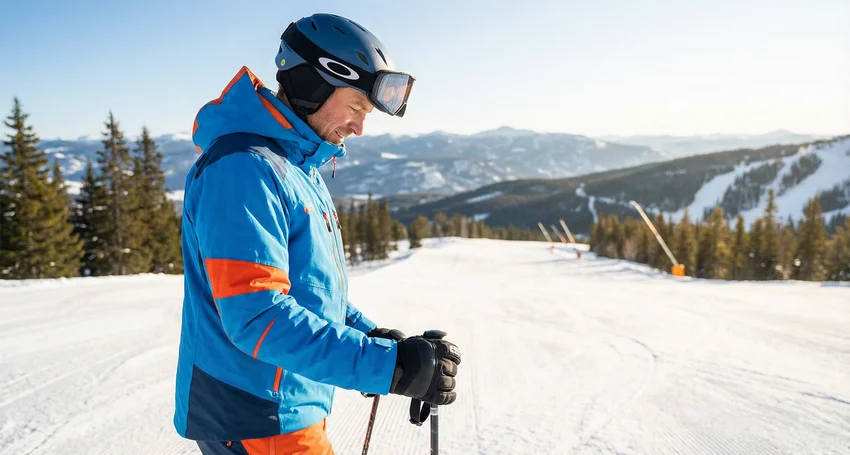
Feeling a flutter of nerves as you look down a snow-covered slope is a perfectly natural experience. For many aspiring skiers, the initial excitement of hitting the mountains is often mixed with a healthy dose of fear. Whether it’s the dizzying heights, the prospect of uncontrollable speed, or simply the fear of falling, these anxieties can feel overwhelming and prevent you from enjoying one of the world’s most exhilarating sports. The good news is that you are not alone, and this fear is something that can be managed and, ultimately, conquered.
This guide is designed to be your trusted companion, offering the kind of friendly and authoritative advice you’d expect from an experienced ski instructor. We understand the psychology behind skiing anxiety and have helped countless nervous beginners transform into confident skiers. It’s not about eliminating fear entirely—even professional athletes feel it—but about learning how to control it, reframe your mindset, and build the skills you need to feel safe and in command on the slopes. We will walk you through practical steps, mental techniques, and foundational knowledge to help you leave your fears at the top of the mountain.
By breaking down the challenge into manageable pieces, from understanding your specific triggers to mastering basic techniques, you can build a solid foundation of confidence. We’ll explore everything from the importance of professional lessons to mental tricks that can calm your nerves in minutes. With the right approach, you can shift your focus from “what if I fall?” to the incredible feeling of gliding over the snow, surrounded by breathtaking alpine scenery. Let’s begin your journey to becoming a confident, fear-free skier.
Understanding Your Fear
Before you can conquer your fear, it’s helpful to understand where it comes from. Skiing anxiety isn’t just a vague feeling of unease; it’s often rooted in specific, identifiable triggers that activate your body’s natural survival instincts. By pinpointing what makes you nervous, you can start to address the root cause of your anxiety.
The Psychology of Skiing Anxiety
When you find yourself at the top of a slope that seems too steep or too icy, your brain can perceive the situation as a genuine threat. This triggers the classic "fight-or-flight" response. Your heart rate increases, your breathing becomes shallow, and your muscles tense up—all physiological reactions designed to prepare you for danger. While useful for escaping a predator, this response is counterproductive for skiing, as tense muscles make it much harder to maintain balance and execute smooth, controlled movements.
This physical reaction is often accompanied by a spiral of negative thoughts. "I ’m going to fall," "I can’t stop," or "I’ll get hurt" are common refrains for nervous skiers. These thoughts create a feedback loop, intensifying your physical anxiety and making it even more difficult to perform. The key to breaking this cycle is to recognise that these feelings are normal and to equip yourself with the tools to manage them.
Common Triggers for Skiing Fear
Most skiing fears fall into a few common categories. Identifying which of these resonate with you is the first step towards overcoming them:
- Fear of Heights: Standing at the top of a mountain can be intimidating. The steepness of the slope can look much more dramatic from above than it actually is, leading to a feeling of vertigo or a sense of being overwhelmed by the scale of the environment.
- Fear of Speed: Speed is an inherent part of skiing, but the thought of it being uncontrollable is a major source of anxiety. Many beginners worry they won’t be able to slow down or stop, imagining themselves hurtling down the mountain without any way to regain control.
- Fear of Falling: No one enjoys falling, but for some, the fear of it is paralysing. This can be linked to a fear of injury, embarrassment, or simply the physical discomfort of hitting the snow. Ironically, being tense and afraid of falling often makes you more likely to do so.
- Fear of Getting Hurt: This is a rational concern, but it can become exaggerated. While skiing does carry some risk, modern equipment and proper technique significantly reduce the likelihood of serious injury. Understanding how to fall correctly can also make a huge difference.
- Fear of Crowds and Collisions: Busy slopes can be daunting, with other skiers and snowboarders whizzing past. The fear of colliding with someone or being hit from behind is a common worry, especially on popular runs during peak season.
Once you’ve identified your primary triggers, you can start to develop targeted strategies to address them. Remember, acknowledgement is the first step towards empowerment.
Building a Foundation of Confidence
Confidence on the slopes isn’t something you’re born with; it’s built through knowledge, practice, and the right support. By taking a structured approach to your learning journey, you can systematically dismantle your fears and replace them with a sense of competence and control.
The Importance of Professional Instruction
While it might be tempting to have a friend or family member teach you, there is no substitute for professional instruction. A qualified ski instructor is trained not only in the mechanics of skiing but also in the art of teaching. They know how to break down complex movements into simple, easy-to-understand steps and can provide instant, personalised feedback to correct your technique. For anyone feeling nervous, this is invaluable. An instructor will ensure you learn in a safe, controlled environment, starting on gentle terrain that is appropriate for your ability level. This structured progression is crucial for building confidence. If you're wondering How Many Ski Lessons Does a Beginner Need?, the answer often depends on the individual, but a series of lessons is always the best way to start. A good instructor will not just teach you how to ski; they will act as your mountain guide, helping you feel secure and supported every step of the way. When you're ready, you can use our platform to Find a Ski School that perfectly matches your needs.
Mastering the Basics: Your Key to Control
Fear often stems from a feeling of being out of control. The antidote is to master the fundamental skills that give you that control back. Before you even think about tackling steeper slopes, you need to be completely comfortable with the basics. This means learning how to put on your skis, how to walk around in your boots, and, most importantly, how to stop. The snowplough (or wedge) is the first and most important technique you will learn. It allows you to control your speed and come to a complete stop at any time. Practising this on a nearly flat area until it becomes second nature is the single most effective way to combat the fear of speed. Once you know, without a doubt, that you can stop whenever you want, the mountain becomes a lot less intimidating. This foundational knowledge is the core of How to Ski for the First Time: Everything You Need to Know.
Gearing Up for Success
Your equipment is your connection to the snow, and having the right gear can make a world of difference to your confidence. Ill-fitting boots, skis that are too long, or inadequate clothing can all contribute to a negative experience. Uncomfortable boots are a common complaint and can be a major distraction. It is essential to learn How to Choose the Right Ski Boots: A Fitting Guide to ensure you have a snug but comfortable fit. Renting from a reputable shop at the resort is a great way to start, as the technicians will ensure the equipment is correctly sized and adjusted for your height, weight, and ability level. Wearing a helmet is also non-negotiable. Not only does it provide crucial protection, but it also offers a significant psychological boost, helping you feel safer and more secure.
Mental Techniques to Calm Your Nerves
Skiing is as much a mental game as it is a physical one. Once you have a handle on the basic techniques, the biggest hurdles are often in your own mind. Learning how to manage your thoughts and stay calm under pressure is a game-changer.
Visualisation and Positive Self-Talk
Your brain has a hard time distinguishing between a vividly imagined experience and a real one. You can use this to your advantage through visualisation. Before you even set foot on the snow, take a few minutes to close your eyes and picture yourself skiing with confidence. Imagine the feeling of gliding smoothly, making controlled turns, and coming to a gentle stop. Visualise yourself smiling and enjoying the scenery. This mental rehearsal primes your brain for success and helps to overwrite the negative thought patterns associated with fear.
Combine this with positive self-talk. When you’re on the slope and you feel a wave of anxiety, consciously replace negative thoughts with positive affirmations. Instead of “I can’t do this,” tell yourself, “I am in control,” or “I know how to stop.” It might feel silly at first, but this simple act of reframing your inner dialogue can have a powerful impact on your emotional state.
Breathing and Relaxation Exercises
When you get scared, your breathing becomes shallow and rapid. You can consciously counteract this physiological response by focusing on your breath. Before you start a run, take a few deep, slow breaths. Inhale deeply through your nose, hold for a few seconds, and then exhale slowly through your mouth. This simple technique, often used in meditation and yoga, activates the parasympathetic nervous system, which helps to calm your body and mind. You can even do this while you’re skiing. If you feel yourself tensing up, pause for a moment, take a deep breath, and consciously relax your shoulders and legs before continuing.
Focus on the Process, Not the Outcome
Fear often arises when we fixate on a future outcome, such as falling or reaching the bottom of the hill. A more effective approach is to bring your focus back to the present moment and the process of skiing. Concentrate on what you need to do right now. Focus on making one good turn. Think about the feeling of your edges gripping the snow. Look just a few metres ahead of you, not all the way down the mountain. By breaking the run down into a series of small, manageable steps, you prevent your mind from becoming overwhelmed by the bigger picture. Skiing, after all, is just a sequence of single turns linked together.
Practical Steps on the Slopes
With a solid foundation and a calmer mindset, it’s time to put theory into practice. Here are some practical strategies to use when you’re on the mountain.
Choose Your Terrain Wisely
This cannot be overstated: start on the right terrain. Every ski resort grades its slopes by difficulty, usually marked by colours (e.g., green for beginner, blue for intermediate, black for expert). Stick to the designated beginner areas and green runs until you are completely confident in your ability to control your speed and turn on them. These slopes are designed to be gentle and wide, giving you plenty of space and time to think. Trying to tackle a slope that is too steep for your ability level is the fastest way to reinforce your fears. There is no shame in spending the whole day on the easiest run in the resort. The goal is to build confidence, not to prove anything.
Look Where You Want to Go
One of the golden rules of skiing is that your body will follow your eyes. If you stare at a tree, you are more likely to ski into it. If you fixate on the steep, icy patch you’re trying to avoid, you’ll probably end up on it. Instead, consciously look where you want to go. Look through your turn to the spot on the slope where you want to finish it. This not only helps with your technique but also keeps your focus on the positive path ahead, rather than on the obstacles or hazards that are causing you anxiety.
Learn How to Fall
Falling is an inevitable part of learning to ski. Instead of fearing it, learn to accept it and do it on your own terms. If you feel you are losing control and picking up too much speed, the safest thing to do is often to just sit down. Try to fall backwards and to the side, so you land on your hip and buttock area. Keep your arms in and try to absorb the impact. Falling this way is far less likely to cause injury than catching an edge at high speed or crashing into an obstacle. Knowing you have this “emergency brake” can be incredibly liberating.
Frequently Asked Questions
Is it normal to be scared of skiing?
Absolutely. Fear of skiing is incredibly common, especially for beginners. The combination of height, speed, and the unfamiliar sensation of sliding on snow is a natural trigger for anxiety. Many experienced skiers started out feeling the exact same way. It’s a rational response to a new and challenging environment, and it’s the first step on the journey to becoming a confident skier.
What is the fastest way to get over the fear of skiing?
The fastest and most effective way is to take a lesson from a professional ski instructor. They can provide you with the correct techniques in a safe environment, building your skills and confidence from the ground up. Mastering the snowplough to control your speed is the most crucial technical skill for overcoming fear. Wondering How to Choose a Ski Instructor: What to Look For? Look for someone patient, experienced with nervous beginners, and who makes you feel comfortable.
Can I teach myself to ski?
While it’s technically possible, it’s not recommended, especially if you are already feeling anxious. You are likely to pick up bad habits that are hard to unlearn later, and you may put yourself in dangerous situations without realising it. An instructor provides a structured learning path that is proven to be safer and more effective, helping you build confidence much more quickly.
How do I deal with crowded slopes?
If crowds make you nervous, try to ski during off-peak times, such as midweek or early in the morning. Stick to the beginner areas, which are generally slower and more controlled. Remember to focus on your own space and ski predictably. Most importantly, remember that the skier in front of you has the right of way. Give them plenty of room.
What if I fall and can’t get up?
This is a common struggle for beginners! Your instructor will teach you the technique for getting up on skis. The key is to position your skis across the slope (perpendicular to the fall line), get them underneath you, and use your hands to push yourself up. It takes a bit of practice, but soon it will become second nature.
Overcoming the fear of skiing is a journey, not a race. Be patient and kind to yourself, celebrate small victories, and focus on progress, not perfection. With the right techniques, a positive mindset, and the support of a good instructor, you can transform your anxiety into pure exhilaration. The stunning mountain views and the incredible feeling of freedom are waiting for you.
Ready to take the first step? At findaskischool.com, we make it easy to connect with top-rated ski schools and patient, professional instructors all over the world. Stop letting fear hold you back from your mountain adventure. Use our platform to Find a Ski School today and start your journey towards becoming a confident, happy skier.
Find your ski school
Compare schools and instructors in resorts around the world — no booking fees, ever.