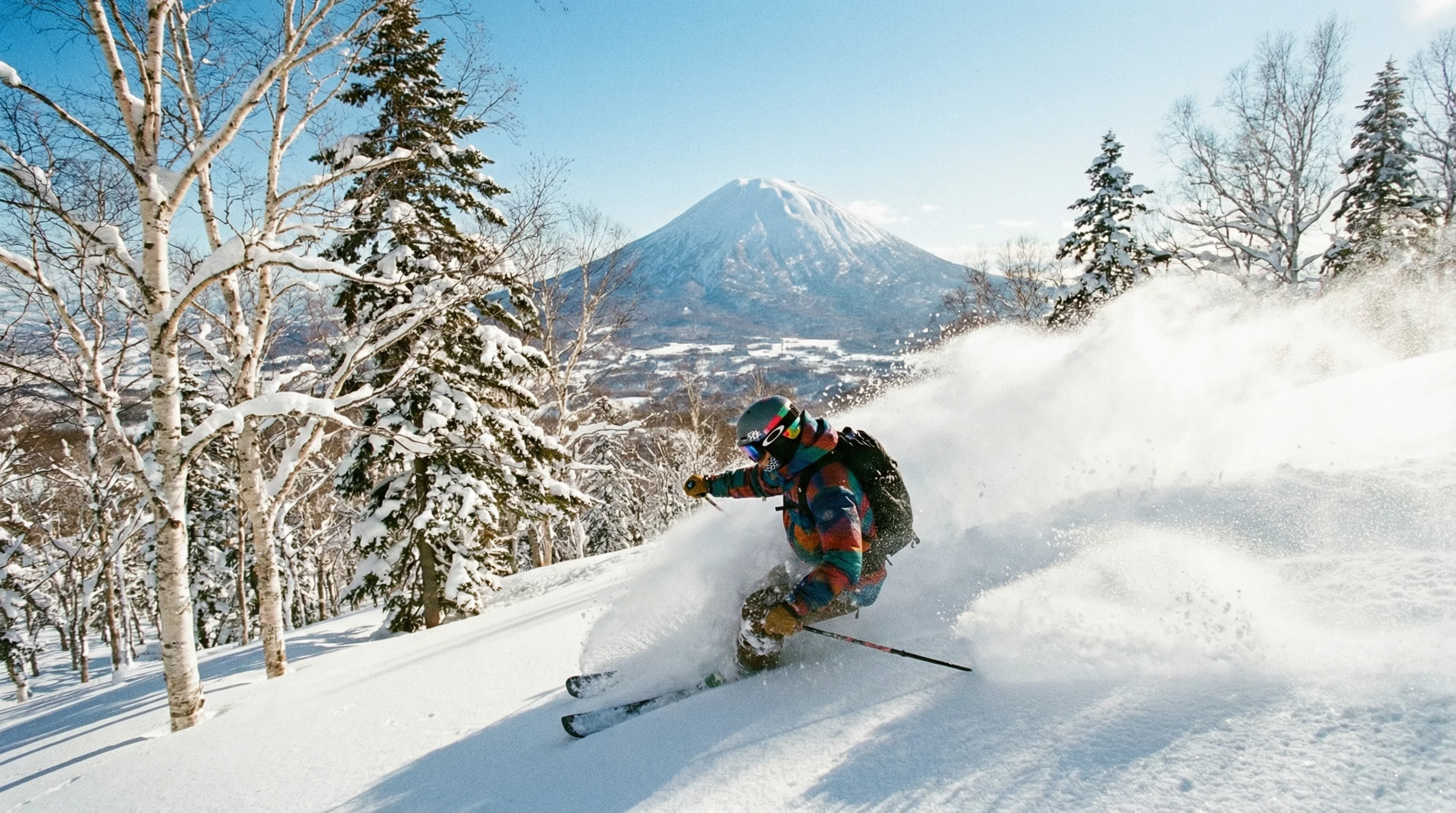
Japan. The name itself conjures images of ancient temples, bustling cities, and delicate cherry blossoms. But for a growing number of skiers and snowboarders, Japan means one thing above all else: powder. An almost mythical amount of light, dry, and unbelievably deep powder snow, affectionately nicknamed “Japow,” blankets the country’s mountains each winter, transforming it into a world-class winter sports destination unlike any other. It’s a place where you can spend your days floating through waist-deep snow and your evenings soaking in a natural hot spring, or onsen, before indulging in some of the world's most delicious and refined cuisine.
Skiing in Japan is more than just a holiday; it’s a cultural immersion. It’s the seamless blend of epic snow conditions, breathtaking alpine scenery, and a rich, welcoming heritage that makes a trip here so magical. From the internationally renowned slopes of Hokkaido to the Olympic mountains of the Japanese Alps on the main island of Honshu, the country offers an incredible diversity of terrain and experiences. Whether you're a seasoned powder hound in search of untracked lines, a family looking for gentle nursery slopes, or an intermediate wanting to perfect your carving on perfectly groomed pistes, Japan delivers.
This guide will walk you through everything you need to know to plan the ultimate Japanese ski adventure. We’ll explore the best resorts, delve into the unique ski culture, and provide practical tips on everything from travel and budgeting to finding the perfect ski lesson. Prepare to discover why Japan is rapidly becoming the world's most sought-after skiing and snowboarding destination.
Why Ski in Japan?
The buzz around Japanese skiing is well-founded. It offers a unique combination of factors that elevate it beyond a typical ski trip. The primary draw is, without a doubt, the snow. Cold Siberian weather systems sweep across the Sea of Japan, picking up moisture and dumping it as vast quantities of incredibly light and dry powder snow, particularly on the northern island of Hokkaido and the mountains of Honshu. Annual snowfall in resorts like Niseko regularly exceeds 15 metres, creating a paradise for powder lovers. This isn't just regular snow; it's the stuff of dreams, so light you can barely feel it as you glide through.
Beyond the legendary “Japow,” Japan offers a profound cultural experience. The concept of omotenashi, or wholehearted hospitality, is woven into the fabric of daily life, ensuring visitors feel welcomed and cared for. After a long day on the slopes, there is no better way to recover than by soaking in a natural, mineral-rich onsen. This centuries-old tradition is an essential part of any Japanese ski trip, soothing tired muscles and offering a tranquil moment of reflection. The culinary scene is another major highlight. Forget overpriced, mediocre mountain food; in Japan, you can feast on everything from steaming bowls of ramen and fresh sushi to world-class Michelin-starred cuisine, often at a fraction of the cost you'd expect in European or North American resorts.
Finally, Japan offers surprising value and variety. While it may seem like a distant and expensive destination, the reality on the ground can be quite different. Lift passes, accommodation, and food can be significantly more affordable than in many of The Best Ski Resorts for Beginners in Europe. The sheer number of resorts—over 500 of them—means there is something for every budget and taste, from sprawling, interconnected international resorts to charming, single-lift local hills where you might not see another foreigner all day.
Top Ski Resorts in [Country]
Japan's ski scene is dominated by two main regions: the powder-Mecca of Hokkaido and the majestic Japanese Alps in the Nagano Prefecture on Honshu. Each offers a distinct experience, but both are home to some of the world's finest ski areas.
Niseko
Located on the northern island of Hokkaido, Niseko is the undisputed king of Japanese ski resorts and the epicentre of the “Japow” phenomenon. It is the most famous and popular international ski destination in the country, renowned for its consistent and abundant snowfall, vast terrain, and vibrant international atmosphere. Niseko United is comprised of four interconnected ski resorts—Grand Hirafu, Hanazono, Niseko Village, and Annupuri—all accessible on a single, all-mountain pass. This creates a huge, varied ski area with something for everyone.
For powder enthusiasts, Niseko is paradise. The resort is famous for its incredible tree skiing and easily accessible off-piste 'sidecountry' through designated gates. The snow is so reliable that you can almost guarantee fresh tracks on any given day during the peak months of January and February. For those new to powder skiing, the sheer volume of snow provides the perfect environment to learn. The groomed runs are also world-class, with wide, sweeping pistes perfect for cruising. The resort is also famous for its night skiing, with huge areas of the mountain illuminated, allowing you to ski that famous powder under the floodlights.
The main hub of Niseko is Hirafu village, a bustling town filled with a fantastic array of restaurants, bars, shops, and accommodation options. The atmosphere is lively and international, with English widely spoken, making it very accessible for first-time visitors to Japan. To make the most of your time on these legendary slopes, it's worth investing in some local expertise. For a complete overview of your options, check out our guide to Ski Schools in Niseko: A Complete Guide to Lessons & Instructors.
Hakuba
Situated in the heart of the spectacular Northern Japan Alps on the main island of Honshu, the Hakuba Valley is another of Japan's premier ski destinations. Host of the 1998 Winter Olympics, Hakuba has a rich skiing heritage and is known for its dramatic, steep alpine scenery, which provides a stunning contrast to the more rounded, volcanic terrain of Niseko. The valley is made up of 10 individual ski resorts, including the well-known Happo-One, Hakuba 47, and Goryu, offering an incredible variety of terrain on a single Hakuba Valley lift pass.
Hakuba's terrain is arguably more challenging and varied than Niseko's, with long, steep groomers, challenging mogul fields, and some of the best and most accessible backcountry skiing in Japan. The sheer scale of the mountains is breathtaking, with peaks rising to nearly 3,000 metres. While it also receives fantastic snow, it's the combination of powder and dramatic, big-mountain terrain that sets Hakuba apart. Each of the ten resorts has its own unique character, from the family-friendly slopes of Tsugaike to the challenging steeps of Hakuba Cortina, famous for its liberal off-piste policy and incredible tree skiing.
The town of Hakuba itself is more spread out than Niseko's Hirafu, with several village bases to choose from. This gives the valley a more traditionally Japanese feel, although areas like Echoland and Wadano have a vibrant nightlife and a great selection of international restaurants. Getting between the resorts is easy thanks to a comprehensive shuttle bus system. To navigate the extensive options for lessons and guiding in this vast valley, our detailed guide to Ski Schools in Hakuba: A Complete Guide to Lessons & Instructors is an essential resource.
Ski Schools and Lessons in Japan
Japan's major international resorts are incredibly well-served by a host of high-quality ski and snowboard schools. The ski school system is modern and professional, with a strong emphasis on customer service and safety. In resorts like Niseko and Hakuba, you will find a large number of international instructors from all over the world, including the UK, Australia, New Zealand, and North America. This means that language is rarely a barrier, and you can easily find private or group lessons conducted in fluent English.
Instructor qualifications are typically of a very high standard. Most instructors will hold an internationally recognised certification, such as those from the British Association of Snowsport Instructors (BASI), the Canadian Ski Instructors' Alliance (CSIA), or the New Zealand Snowsports Instructors Alliance (NZSIA). This ensures that you are receiving instruction that is not only safe but also employs the latest teaching methodologies. Whether you are a complete beginner wanting to learn the basics or an expert skier looking for a guide to show you the best-hidden powder stashes, you will find a programme to suit your needs.
Typical costs for lessons vary depending on the resort and the type of lesson. Group lessons are the most affordable option, with a half-day lesson typically costing between ¥10,000 and ¥15,000. Private lessons offer a more personalised experience and faster progression, with prices starting from around ¥30,000 for a half-day. While this may seem expensive, the one-on-one attention can be invaluable, especially when learning to ski deep powder. Booking in advance is highly recommended, especially during peak periods like Christmas, New Year, and Chinese New Year.
Best Time to Visit
The Japanese ski season generally runs from early December through to late April, and sometimes even into the first week of May in resorts with high elevations. However, the best time to visit depends on what you're looking for.
For the deepest and most reliable powder conditions, January and February are the peak months. This is when the Siberian storms are at their most active, and it's not uncommon for it to snow every day for weeks on end. This is the 'Japow' season, but it's also the coldest and busiest time, so be prepared for lower temperatures and more people on the slopes.
December can be a great option to catch the early season snow. The base is still building, but you can often find excellent conditions and fewer crowds in the run-up to Christmas. It's a gamble, but one that can pay off with quiet slopes and fresh powder.
March is a fantastic all-round month to ski in Japan. The storm cycles become less frequent, but are often replaced by beautiful bluebird days. The powder is still excellent, especially in the first half of the month, but you also get the benefit of more sunshine and slightly warmer temperatures. The slopes are also noticeably quieter after the first week of March, and it's a great time to find deals on accommodation and lift passes.
April marks the spring skiing season. The powder days are mostly gone, but the groomed runs are fantastic, and the weather is mild and sunny. It's the perfect time for fair-weather skiers, families, and beginners. It's also the least crowded and most affordable time to visit. Many resorts close in mid-April, but those with higher elevations can stay open until the first week of May.
Getting There
Getting to the Japanese ski resorts is surprisingly straightforward. The country's world-class public transport system makes travel efficient and comfortable.
For resorts in Hokkaido, such as Niseko, the main gateway is New Chitose Airport (CTS) near Sapporo. There are numerous international flights that fly directly into CTS, or you can connect through major Japanese hubs like Tokyo's Narita (NRT) or Haneda (HND) airports. From New Chitose, the easiest way to get to the resorts is via a pre-booked airport transfer bus, which takes approximately 2.5 to 3 hours.
For resorts on Honshu, including the Hakuba Valley, the most common entry point is Tokyo's Narita (NRT) or Haneda (HND) airports. From Tokyo, the most exciting and efficient way to travel is via the world-famous Shinkansen, or bullet train. From Tokyo Station, you can take the Hokuriku Shinkansen to Nagano Station, a journey of about 90 minutes. From Nagano, it's a 60-90 minute bus or taxi ride to the Hakuba Valley. Alternatively, direct bus services run from the airports straight to the Hakuba Valley, which can be a more straightforward and cost-effective option, though the journey is longer (around 5-6 hours).
Driving is also an option, and renting a car can give you the flexibility to explore different resorts. However, be aware that you will need an International Driving Permit, and driving in heavy snow conditions can be challenging if you are not experienced. Roads are generally well-maintained, but a 4WD vehicle is highly recommended.
Budget Guide
Planning a ski trip to Japan can be surprisingly affordable compared to its European and North American counterparts. While you can certainly spend a fortune on luxury, there are plenty of ways to enjoy the Japanese ski experience on a more modest budget. Note that a comprehensive breakdown of lift ticket costs can be found in our Ski Pass Prices in Europe: A Complete Guide for 2026 (note: while focused on Europe, it provides a useful cost comparison framework).
- Lift Passes: A daily lift pass at a major resort like Niseko or Hakuba typically costs between ¥8,000 and ¥10,000. Multi-day passes offer better value, and epic season passes like the Ikon Pass or Epic Pass now include several days at certain Japanese resorts, which can be a game-changer for international visitors.
- Accommodation: Japan offers a huge range of accommodation to suit all budgets. You can find everything from luxury ski-in, ski-out hotels and fully-serviced apartments to budget-friendly lodges, pensions, and hostels. Expect to pay anywhere from ¥5,000 per person per night for a dorm bed to over ¥100,000 per night for a luxury apartment.
- Food: Eating in Japan can be incredibly affordable. While the resort villages have high-end dining options, you can also eat very well for very little. A hearty bowl of ramen or a katsu curry in a local village restaurant might only cost ¥1,000-¥1,500. Convenience stores (or 'konbinis') like 7-Eleven and Lawson are a godsend for budget travellers, offering a surprisingly delicious range of cheap and tasty meals, snacks, and drinks.
- Lessons: As mentioned, ski lessons are a significant but worthwhile investment. Budget around ¥10,000-¥15,000 for a group lesson and ¥30,000+ for a private lesson.
Tips for Skiing in Japan
- Cash is King: While credit cards are becoming more widely accepted, Japan is still a cash-based society, especially in smaller towns and restaurants. Always carry a good amount of Japanese Yen with you.
- Onsen Etiquette: Onsens are a must-do experience, but there are strict rules. You must wash thoroughly in the shower area before entering the bath, and you must not wear any clothing (including swimsuits) into the water. Tattoos can be an issue, as they are traditionally associated with the Yakuza (Japanese mafia). Many onsens have a strict no-tattoo policy, but some are becoming more lenient. Always check the policy beforehand or look for private onsens (kashikiri) that you can rent by the hour.
- Learn a Few Phrases: While English is widely spoken in the main resorts, learning a few basic Japanese phrases will be greatly appreciated by the locals. 'Arigato' (thank you), 'Sumimasen' (excuse me/sorry), and 'Konnichiwa' (hello) are a good start.
- Don't Tip: Tipping is not customary in Japan and can be considered rude. Excellent service is standard.
- Use the Konbini: The local convenience stores are your best friend for cheap and delicious snacks, drinks, and even full meals. They are an essential part of the Japan experience.
Frequently Asked Questions
Is Japan good for beginner skiers?
Absolutely. While famous for its deep powder, Japan's major resorts have excellent and extensive beginner areas with gentle slopes and magic carpet lifts. The soft, forgiving snow also makes learning easier and falling less painful. The high quality of the ski schools, with many English-speaking instructors, makes it one of the best places in the world to learn to ski or snowboard.
Do I need special skis for the powder in Japan?
While not strictly necessary, a pair of wide, powder-specific skis will make a huge difference to your enjoyment of the deep snow. They provide more float and make turning much easier. If you don't own powder skis, don't worry. Every resort has high-quality rental shops where you can rent the latest powder-specific skis and snowboards for a reasonable price.
What is the après-ski scene like in Japan?
The après-ski scene in Japan is generally more relaxed than in Europe. In resorts like Niseko, you'll find a vibrant bar scene with plenty of options for a post-ski beer. However, the culture is less about dancing on tables in your ski boots and more about enjoying a quiet drink, soaking in an onsen, or heading out for an amazing meal. The nightlife in areas like Hirafu in Niseko and Echoland in Hakuba can be very lively, continuing late into the night.
Japan offers a ski and snowboard experience that is truly unique and unforgettable. The combination of legendary powder snow, rich cultural experiences, and warm hospitality is something every skier should experience at least once. Whether you're carving down an Olympic piste in Hakuba or floating through the trees in Niseko, you're creating memories that will last a lifetime. When you're ready to take the next step and perfect your skills on these incredible mountains, be sure to Find a Ski School through our comprehensive platform to connect with the best instructors and guides in Japan.
Find your ski school
Compare schools and instructors in resorts around the world — no booking fees, ever.