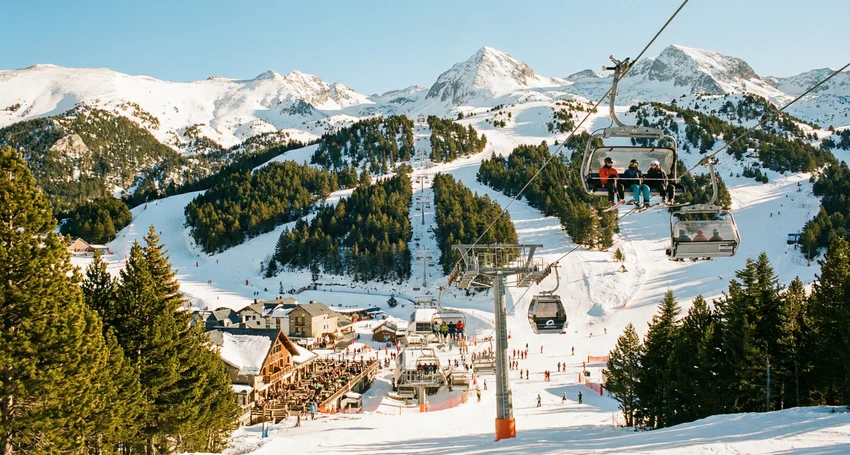
# Skiing in Spain: A Guide to Spanish Ski Resorts
When you think of Spain, you might picture sun-drenched beaches, vibrant cities, and delicious tapas. But did you know that Spain is also a fantastic destination for skiing? With several mountain ranges, including the Pyrenees and the Sierra Nevada, Spain offers a surprising variety of ski resorts to suit all levels and budgets. Whether you're a seasoned pro or a complete beginner, you'll find plenty of opportunities to hit the slopes and enjoy the stunning mountain scenery.
Spain's ski resorts may not be as famous as their counterparts in the Alps, but they offer a unique and unforgettable experience. You can combine a day of skiing with a taste of Spanish culture, enjoying delicious local cuisine and wine in the evenings. And with a more relaxed and friendly atmosphere than many of the larger European resorts, Spain is the perfect place to learn to ski or simply enjoy a more laid-back ski holiday.
This guide will tell you everything you need to know about skiing in Spain, from the best resorts and ski schools to the best time to visit and how to get there. We'll also give you some insider tips to help you make the most of your trip. So, if you're looking for a ski holiday with a difference, read on to discover why Spain should be at the top of your list.
Why Ski in Spain?
Spain offers a unique combination of world-class skiing, vibrant culture, and excellent value for money. The country's ski resorts are known for their sunny weather, with the Sierra Nevada boasting the most sunshine hours of any ski resort in Europe. This means you can enjoy long, sunny days on the slopes, followed by a relaxed après-ski scene in the evening.
But it's not just the weather that makes Spain a great place to ski. The country's ski resorts offer a wide variety of terrain, from gentle beginner slopes to challenging off-piste runs. And with a modern and efficient lift system, you can spend more time skiing and less time queuing. The ski schools in Spain are also of a high standard, with many instructors speaking English and other languages. This makes it a great place to learn to ski or improve your technique.
In addition to the skiing, Spain offers a rich and diverse culture to explore. You can combine your ski trip with a visit to a historic city like Granada or a relaxing break on the coast. And with a wide range of accommodation options, from budget-friendly apartments to luxury hotels, you can find the perfect place to stay to suit your budget and style. Plus, the ski pass prices in Europe are often more affordable in Spain than in other countries, making it a great value destination.
Top Ski Resorts in Spain
Spain has a fantastic range of ski resorts, from the sun-drenched slopes of the Sierra Nevada to the extensive terrain of the Pyrenees. Each resort has its own unique character and charm, offering something for every type of skier and snowboarder.
Sierra Nevada
Located in the south of Spain, the Sierra Nevada is Europe's most southerly ski resort and boasts an incredible sunshine record. Just a short drive from the historic city of Granada, you can ski in the morning and be on the beach in the afternoon! The resort itself is high and snow-sure, with a long season that often runs from late November to early May. The ski area offers a great mix of terrain, with wide, cruising blue and red runs perfect for intermediates, as well as some more challenging black runs and off-piste opportunities for advanced skiers. For beginners, there are excellent nursery slopes and a great selection of ski schools. A visit to the Sierra Nevada is a must for any skier looking for a unique Spanish experience. For more detailed information, check out our guide to Ski Schools in Sierra Nevada: A Complete Guide to Lessons & Instructors.
Baqueira-Beret
Situated in the heart of the Spanish Pyrenees, Baqueira-Beret is one of Spain's largest and most prestigious ski resorts. With over 160km of marked pistes, it offers a huge variety of skiing for all abilities. The resort is known for its excellent snow record, thanks to its Atlantic-facing location, and its modern and efficient lift system. Baqueira-Beret is made up of three main areas: Baqueira, Beret, and Bonaigua, each with its own distinct character. The resort is particularly well-suited to intermediate and advanced skiers, with a fantastic range of red and black runs, as well as some legendary off-piste terrain. For those looking for a challenge, the Escornacrabes couloir is a must-ski for expert skiers. The resort also has a great reputation for its gastronomy, with a wide range of excellent restaurants both on and off the mountain.
Formigal-Panticosa
Also located in the Spanish Pyrenees, in the Tena Valley, Formigal-Panticosa is another of Spain's largest ski areas, with 180km of pistes. The resort is a result of the union of two ski areas, Formigal and Panticosa, and offers a vast and varied ski experience. Formigal is the larger of the two areas, with four interconnected valleys and a lively, modern atmosphere. It's a great resort for all abilities, with plenty of wide, gentle slopes for beginners, as well as some more challenging terrain for more experienced skiers. Panticosa is a smaller, more traditional village with a charming, family-friendly atmosphere. The ski area is smaller than Formigal but offers some beautiful tree-lined runs and a more relaxed pace. Together, the two resorts offer a fantastic all-round ski holiday destination, with something for everyone.
Ski Schools and Lessons in Spain
Spain has a well-developed ski school system with a reputation for high-quality instruction. Whether you're a complete beginner or an experienced skier looking to refine your technique, you'll find a wide range of ski schools and private instructors to choose from. The majority of ski schools in Spain follow the Spanish ski instructor qualification system, which is internationally recognised and ensures a high standard of teaching. Many instructors also hold qualifications from other international bodies, such as the British Association of Snowsport Instructors (BASI) or the Canadian Ski Instructors' Alliance (CSIA).
Language is rarely a barrier in Spanish ski resorts, as most ski schools have instructors who are fluent in English and other European languages. This is particularly true in the larger resorts like Sierra Nevada and Baqueira-Beret, which attract an international clientele. When booking lessons, it's always a good idea to confirm language availability, especially if you're looking for instruction in a less common language. For those looking for a more immersive experience, taking a lesson with a local Spanish instructor can be a great way to practice your language skills and learn more about the local culture.
Ski lessons in Spain are generally more affordable than in many other European countries, making it a great place to learn to ski or take the whole family for lessons. The cost of lessons can vary depending on the resort, the time of season, and whether you opt for group or private tuition. As a rough guide, you can expect to pay around €50-€60 per hour for a private lesson, while group lessons are typically more affordable. For example, a week of group lessons might cost around €150-€200. It's always best to book your lessons in advance, especially during peak season, to ensure availability and get the best prices. For a great place to start, you can Find a Ski School on our website.
Best Time to Visit
The ski season in Spain typically runs from late November or early December to mid-April. However, the exact dates can vary depending on the resort and the annual snowfall. The high-altitude resorts, such as Sierra Nevada, often have a longer season, sometimes extending into early May. The best time to ski in Spain depends on your priorities. If you're looking for the best snow conditions, January and February are generally the most reliable months. This is when the snowpack is at its deepest and the conditions are at their best for both on and off-piste skiing. However, this is also the peak season, so the resorts will be at their busiest and prices for flights and accommodation will be at their highest.
If you're looking to avoid the crowds and save some money, consider visiting in the off-peak months of December, March, or April. December can be a magical time to visit, with a festive atmosphere in the resorts and the chance of a white Christmas. However, the snow conditions can be less reliable, particularly early in the month. March and April are great months for spring skiing, with longer, sunnier days and a more relaxed atmosphere. The snow conditions can still be excellent, particularly at higher altitudes, and you'll often find great deals on lift passes and accommodation. It's worth noting that Easter is a popular time for Spanish families to go skiing, so the resorts can be busy during this period.
For those who are new to the sport, some of the best ski resorts for beginners in Europe can be found in Spain, and visiting during the off-peak season can provide a less intimidating environment to learn.
Getting There
Getting to Spain's ski resorts is relatively straightforward, with several international airports providing easy access to the main ski areas. For the Sierra Nevada, the closest airport is Granada-Jaén Airport (GRX), which is just a 50-minute drive from the resort. Malaga Airport (AGP) is another popular option, with a wider range of international flights and a transfer time of around two hours. From both airports, you can hire a car, take a private transfer, or catch a bus to the resort. There are regular bus services from Granada city centre to the Sierra Nevada, making it a convenient and affordable option.
For the ski resorts in the Spanish Pyrenees, the best airport to fly into depends on which resort you're visiting. For Baqueira-Beret, the closest airports are Lourdes (LDE) in France and Lleida-Alguaire (ILD) in Spain, both of which are around a two-hour drive away. Barcelona (BCN) and Toulouse (TLS) are also popular gateway airports, with a transfer time of around three to four hours. For Formigal-Panticosa, the closest airports are Huesca-Pirineos Airport (HSK) and Zaragoza Airport (ZAZ), both of which are around a two-hour drive from the resort. Again, from all these airports, you can hire a car, take a private transfer, or use public transport to reach your final destination.
Driving to the ski resorts in Spain is also a popular option, particularly for those travelling from other parts of Spain or from neighbouring France. The road network in Spain is excellent, and the resorts are well-signposted. However, it's important to be aware that mountain roads can be challenging, particularly in winter conditions. It's essential to have snow chains or winter tyres, and to check the weather and road conditions before you travel. If you're not confident driving in winter conditions, it's often best to opt for a transfer or public transport.
Budget Guide
One of the great advantages of a ski holiday in Spain is that it can be more affordable than in many other European destinations. However, as with any ski trip, costs can vary widely depending on your choices of accommodation, dining, and activities. A daily lift pass in a major Spanish resort like Sierra Nevada or Baqueira-Beret will typically cost between €50 and €65 for an adult during peak season, with discounts available for multi-day passes, children, and seniors. Accommodation can range from budget-friendly self-catered apartments, which can be found for under €100 per night, to luxurious hotels that can cost several hundred euros per night.
Food and drink are also generally more reasonably priced than in the Alps. A three-course meal in a mid-range restaurant might cost around €30-€40 per person, while a beer or a glass of wine on the mountain will be significantly cheaper than in France or Switzerland. Ski and snowboard rental is also competitively priced, with a full set of equipment costing around €20-€30 per day. As mentioned earlier, ski lessons offer great value, with group lessons being a particularly cost-effective way to learn.
Tips for Skiing in Spain
To make the most of your Spanish ski adventure, here are a few insider tips:
- Embrace the Spanish Schedule: Don't be surprised if the slopes are quiet in the early morning and then get busier later on. Spaniards tend to start their day later, and this extends to the ski slopes. Enjoy the early morning corduroy to yourself, and then join the locals for a long, leisurely lunch.
- Learn a Little Spanish: While English is widely spoken in the main resorts, learning a few basic Spanish phrases will be greatly appreciated by the locals and will enhance your cultural experience. A simple "hola" (hello), "gracias" (thank you), and "una cerveza, por favor" (a beer, please) will go a long way.
- Explore Beyond the Slopes: Spain has so much to offer beyond its ski resorts. Take a day off from skiing to visit a nearby city, explore a traditional mountain village, or simply relax and soak up the Spanish sunshine. In the Sierra Nevada, a visit to the magnificent Alhambra Palace in Granada is an absolute must.
- Enjoy the Après-Ski, Spanish Style: The après-ski scene in Spain is more relaxed than in many other countries. Instead of dancing on tables in your ski boots, you're more likely to find people enjoying tapas and a glass of wine in a cosy bar. It's the perfect way to unwind after a day on the mountain.
Frequently Asked Questions
Is Spain good for beginner skiers?
Absolutely! Spain is an excellent destination for beginners. The resorts have fantastic nursery slopes, a wide range of gentle green and blue runs, and high-quality ski schools with English-speaking instructors. The relaxed and friendly atmosphere also makes it a less intimidating place to learn than some of the larger, more crowded resorts in the Alps. Many resorts, like those in the Pyrenees, are also close to other attractions, making it a great option for a mixed-activity holiday, similar to the options available for those looking at ski schools in Grandvalira.
When is the best time to ski in Spain?
For the most reliable snow conditions, January and February are the peak months. However, if you prefer warmer weather and fewer crowds, March and April offer fantastic spring skiing conditions, with long, sunny days. The season generally runs from December to April, with high-altitude resorts like Sierra Nevada sometimes staying open until early May.
How expensive is skiing in Spain compared to the Alps?
Generally, skiing in Spain is more affordable than in the major Alpine countries like France, Switzerland, and Austria. Lift passes, accommodation, food, and ski lessons all tend to be cheaper. This makes it a great value destination, especially for families and those on a budget.
Do I need to speak Spanish?
While it's always appreciated if you try to speak a little of the local language, it's not essential. In the main ski resorts, English is widely spoken in hotels, restaurants, and ski schools. You'll have no problem getting by with just English.
Can I combine a ski trip with a city break?
Yes, and it's a fantastic idea! Many of Spain's ski resorts are located within easy reach of major cities. From the Sierra Nevada, you can easily visit Granada and the famous Alhambra. From the Pyrenees, you could combine your trip with a visit to Barcelona or Zaragoza. This is one of the unique advantages of a ski holiday in Spain.
Ready to hit the sunny slopes of Spain? Use findaskischool.com to find and book the best ski schools and instructors across the country. Whether you're looking for group lessons in the Sierra Nevada or a private guide to show you the best off-piste in Baqueira-Beret, we've got you covered. Start planning your Spanish ski adventure today!
Find your ski school
Compare schools and instructors in resorts around the world — no booking fees, ever.