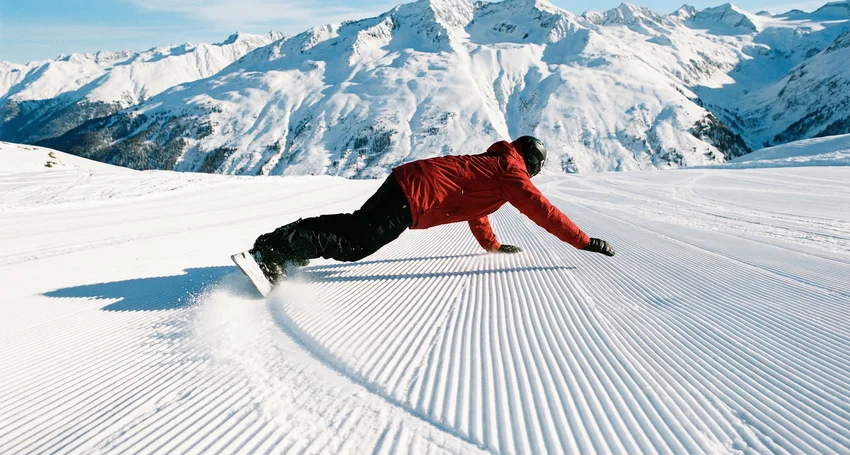
There’s a moment in every snowboarder’s journey when they transition from simply getting down the mountain to truly riding it. It’s the moment they link their first proper carved turns, leaving behind a clean, pencil-thin line in the snow. This is the art of carving, a technique that separates the intermediates from the advanced, and the advanced from the masters. It’s a feeling of pure, unadulterated connection with the mountain, a silent conversation between you, your board, and the snow. If you’ve been struggling to move beyond skidded turns and want to experience the exhilarating feeling of effortless speed and control, you’ve come to the right place. This guide will break down the essential snowboard carving tips to help you elevate your riding and transform your turns from sloppy to surgical.
Carving is more than just turning; it’s about using the edge of your snowboard to its full potential. Instead of pushing snow down the mountain in a skidded turn, a carved turn uses the sidecut of the board to create a clean arc, generating speed and momentum. It’s the most efficient way to ride, and once you’ve mastered it, you’ll wonder how you ever rode any other way. But like any advanced technique, it requires practice, patience, and a solid understanding of the fundamentals. In this comprehensive guide, we’ll delve into everything you need to know to start carving like a pro, from the right equipment and body position to drills and exercises that will have you laying down perfect tracks in no time.
Understanding the Mechanics of Carving
Before we dive into the ‘how-to’, it’s crucial to understand the ‘why’. What exactly is happening when you carve? It all comes down to the design of your snowboard. The curved edge of your board, known as the sidecut, is what allows you to carve. When you tilt your board onto its edge and apply pressure, the sidecut engages with the snow, and the board naturally wants to follow that arc. The more you tilt the board, the tighter the turn will be. The key to a good carve is to maintain constant pressure on the edge throughout the turn, allowing the board to do the work.
Skidded Turns vs. Carved Turns
To truly appreciate the beauty of a carved turn, it’s helpful to understand its counterpart: the skidded turn. A skidded turn is what most beginners learn first. It involves pushing the tail of the board out to control speed and direction. While effective for getting down the mountain, it’s inefficient and scrubs off speed. A carved turn, on the other hand, is all about edge control. Instead of pushing the board sideways, you’re balancing on the edge, letting the sidecut guide you through the turn. The result is a smoother, faster, and more controlled ride.
Essential Gear for Carving
While you can learn to carve on any snowboard, having the right gear can make a significant difference in your progression. A board with a medium to stiff flex will provide the stability and edge hold you need to maintain a strong carve, especially at higher speeds. Your boots and bindings should also be responsive and provide good support, allowing you to transfer energy efficiently from your body to the board. It’s also worth considering the conditions. Freshly groomed pistes are the ideal playground for learning to carve, as they provide a smooth, consistent surface to practice on.
Body Position and Technique: The Foundation of a Good Carve
Your body position is the most critical element in achieving a perfect carve. A solid, athletic stance is the foundation upon which all good carving is built. Your knees and ankles should be flexed, your back straight, and your arms relaxed and out to the side for balance. Your head should be up, looking in the direction you want to go, not down at your board. This will help you anticipate the terrain and initiate your turns smoothly.
Initiating the Turn
To initiate a carve, you need to transfer your weight onto the edge you want to engage. For a toe-side turn, you’ll want to apply pressure to your toes, driving your knees towards the snow. For a heel-side turn, you’ll sink your weight into your heels, as if you’re sitting in a chair. The key is to make this a smooth, progressive movement. Avoid any sudden, jerky motions, as this will cause the edge to lose its grip.
Edge Control and Pressure
Once you’ve initiated the turn, the next step is to maintain constant pressure on the edge. This is what will keep the board locked into the carve. Think about flexing your ankles and knees to absorb any bumps in the snow and maintain a consistent edge angle. The more you pressure the edge, the more the board will flex, and the tighter the turn will be. Experiment with different amounts of pressure to see how it affects your turns.
A Step-by-Step Guide to Your First Carved Turns
Now that you understand the theory, it’s time to put it into practice. Find a gentle, wide-open slope with plenty of room to manoeuvre. Start by traversing across the slope on your heel-side edge. Get a feel for how the board wants to turn as you apply pressure to your heels. Once you’re comfortable, try to make a complete C-shaped turn, finishing with you pointing up the mountain.
- Start with a Traverse: Begin by riding across the slope on one edge. Focus on maintaining your balance and a consistent edge angle.
- Initiate the Turn: Smoothly transfer your weight to the new edge. For a toe-side turn, roll your ankles and knees towards the snow. For a heel-side turn, sink your weight into your heels.
- Maintain Edge Pressure: As the board starts to turn, keep the pressure on. Look where you want to go and let the board follow your gaze.
- Complete the Turn: Hold the edge until you’ve completed the turn. You should end up traversing in the opposite direction.
- Link Your Turns: Once you’re comfortable making single carved turns, it’s time to link them together. As you come to the end of one turn, start to initiate the next one. The goal is to create a smooth, S-shaped pattern in the snow.
Common Mistakes and How to Fix Them
Even with the best instruction, you’re bound to make a few mistakes along the way. Here are some of the most common carving pitfalls and how to avoid them:
- Leaning too far into the turn: This is a common mistake that can cause you to lose your balance and fall. Instead of leaning your whole body, focus on tilting the board with your ankles and knees.
- Not committing to the edge: If you’re hesitant to put the board on its edge, you’ll end up skidding instead of carving. Trust your equipment and commit to the turn.
- Looking down at your board: This will throw off your balance and prevent you from seeing where you’re going. Keep your head up and look in the direction of your turn.
- Counter-rotating: This is when your upper body twists in the opposite direction of your turn. This will fight against the carve and make it difficult to maintain your edge. Keep your shoulders aligned with your board.
If you find yourself struggling with any of these issues, it might be time to seek some professional guidance. A qualified instructor can provide personalised feedback and help you correct any bad habits before they become ingrained. You can Find a Ski School or a certified snowboard instructor in your area to get the hands-on training you need to take your carving to the next level.
Frequently Asked Questions
How long does it take to learn to carve on a snowboard?
The time it takes to learn to carve varies from person to person. It depends on your previous snowboarding experience, your natural ability, and how much time you dedicate to practicing. Some people might pick it up in a few days, while for others it might take a few weeks or even a whole season. The key is to be patient and persistent. Don’t get discouraged if you don’t get it right away. Keep practicing, and eventually, it will click.
What is the best type of snowboard for carving?
A board with a medium to stiff flex is generally best for carving. This will provide the stability and edge hold you need to maintain a strong carve, especially at higher speeds. A board with a directional shape and a longer effective edge will also perform well. However, you can learn to carve on any snowboard. The most important thing is to have a board that you’re comfortable with and that is the right size for you.
Can I learn to carve on my own?
While it’s possible to learn to carve on your own, it’s highly recommended to take a lesson from a qualified snowboard instructor. An instructor can provide you with personalised feedback and help you correct any bad habits before they become ingrained. They can also teach you the proper technique and drills to help you progress faster. A good instructor can make all the difference in your learning experience.
Do I need special boots for carving?
You don’t necessarily need special boots for carving, but it’s important to have boots that are responsive and provide good support. Your boots should fit well and hold your heel securely in place. This will allow you to transfer energy efficiently from your body to the board. If your boots are too soft or sloppy, it will be difficult to maintain a strong edge.
What’s the difference between a Euro carve and a regular carve?
A Euro carve is a more advanced carving technique where the rider lays their body out on the snow during the turn. It’s a very stylish and dynamic way to carve, but it requires a high level of skill and control. A regular carve, on the other hand, is a more upright and fundamental carving technique. It’s the foundation upon which all other carving techniques are built. Before you can run, you have to walk, and the same is true for carving. Master the regular carve first, and then you can start to experiment with more advanced techniques like the Euro carve.
Now that you’re armed with the knowledge and techniques to start carving, it’s time to hit the slopes and put it all into practice. Remember to be patient, persistent, and most importantly, have fun! If you’re looking for the perfect place to hone your new skills, be sure to check out findaskischool.com. We can help you find and book the best ski and snowboard schools and instructors all over the world. So what are you waiting for? Your next adventure awaits!
Find your ski school
Compare schools and instructors in resorts around the world — no booking fees, ever.